Researchers tested 25 melatonin gummies against their own labels. The number on the bottle was mostly fiction.
A sleep aid sold by the millions, measured in a lab against the dose printed on its own package. What the consumer desk found on the shelf is a lesson in reading the fine print, and a reason to look past the whole category.
 By The Fine Print consumer deskReviewed for accuracy · Updated July 20, 2026
In 2023, a group of researchers did something most shoppers never get to do. They bought melatonin gummies off ordinary store shelves, carried them back to a lab, and measured what was inside each bottle.
They tested 25 products in all. The question was plain. Does the amount of melatonin in the gummy match the amount printed on the label.
For 22 of those 25 products, the answer was no.
Only three bottles came within ten percent of what the label claimed. The rest missed, and some missed by a distance no one could call a rounding error.
The measured melatonin ranged from 74 percent of the labeled dose on the low end to 347 percent on the high end. One bottle held more than three times what its label promised.
And one product, sold as a melatonin gummy, held no detectable melatonin at all. What it did carry was a dose of CBD that was never the reason anyone reached for it.
That study ran in JAMA, one of the most cited medical journals in the country. It did not describe a black-market pill or a scam website. These were gummies bought the same way a person buys a bottle of vitamins.
What else turned up in the bottles
Melatonin was not the only surprise. When the team measured the gummies, they also looked for what else had been added, and the labels came up short there too.
Five of the products listed CBD as an ingredient. The measured amount ran from 10.6 to 31.3 milligrams a serving, and in the bottle with no melatonin, CBD was the only active compound the lab could find.
A shopper reaching for a sleep gummy would have no way to know any of that from the front of the package. The label named one thing. The bottle sometimes held another.
How a label ends up meaning so little
The reason is duller than a conspiracy, and that makes it worse. Supplements are not tested for dose by the government before they reach a shelf.
A prescription drug has to prove its contents to the FDA before it can be sold. A supplement does not. The maker is responsible for its own accuracy, and no one checks the math before it ships.
A supplement label is a promise, not a receipt. It states what the maker meant to put in the bottle, not what a lab would find if it measured.
Melatonin makes the gap easy to ignore. It is cheap to synthesize and cheap to add, so little cost pressure keeps the dose honest, and a gummy that runs high looks the same on the shelf as one that runs true.
Then there is the candy itself. Melatonin has to be mixed into a warm gummy base and poured into molds, and the dose can settle unevenly from the first piece in a batch to the last.
That is the spread the JAMA team measured. Two bottles of one product, same label, can hold meaningfully different amounts, and the number on the front stays the same either way.

The number that turned this from annoyance to alarm
For a while the mislabeling read as a quality problem, the kind of thing that irritates a careful shopper. Then the pediatric data arrived, and the tone changed.
The CDC counted melatonin ingestions reported to poison control centers over ten years. Between 2012 and 2021, the yearly total rose by 530 percent.
In raw numbers, reports climbed from 8,337 in a year to 52,563. By 2020, melatonin had become the single most frequently reported substance ingested by children to the country's poison control centers.
Most of those were young children who found a jar of gummies that looked and tasted like candy. The rise tracked the flood of sweet, brightly packaged melatonin onto shelves over the same decade.
Set that next to the label finding and the problem sharpens. When a single gummy can hold three times its printed dose, "one gummy" stops being a number anyone can count on, and it counts for the least where the body is smallest.

What melatonin was ever built to do
Underneath the label problem sits a second one that gets almost no attention. Even a perfectly dosed melatonin gummy is doing a narrower job than most buyers think.
Melatonin is not a sedative. It does not build sleep pressure and it does not hold a body asleep. It is a timing signal, the chemical the body releases to mark that night has begun.
It earns its keep in a narrow lane: shift work, jet lag, a body clock that runs late. Those are timing problems, and timing is the one thing it does well.
Melatonin sets the clock. It does not run the night. It can tell a late body clock that bedtime has arrived, and past that its work is mostly done.
The dosing math makes the mismatch plainer. The body makes roughly 0.3 milligrams of its own melatonin at night. Many gummies on the shelf carry 5 or 10 milligrams, more than ten times a physiologic amount.
Higher is not better here. A 2024 review of the trials found that doses above 5mg add nothing to how fast a person falls asleep. What the extra does do is linger.
Melatonin at a high dose is still circulating in the blood come morning. That leftover signal is a large part of the heavy, underwater feeling people describe after a melatonin night, the fog that trails them past the first coffee.
The extended-release versions stretch the problem out rather than end it. A dose built to release slowly is a dose still working when the alarm goes off.
There is also the quieter matter of taking a hormone every night. Melatonin is not a vitamin.
It is a signaling chemical the body makes on its own, and reaching for an outside dose of it night after night is a habit worth a second thought.
So the shelf offers a hormone dosed many times higher than the body's own, printed on a label a lab could rarely confirm, aimed at the front of the night, that tends to overstay into the morning.
The problem was never only the factory
It is tempting to read the JAMA study as a story about sloppy manufacturing, fixable with tighter quality control. That misses the deeper point.
Tighten every factory tomorrow and the aisle still carries a design flaw. It bet the whole category on a hormone that was never meant to keep a body asleep through the back half of the night.
The most common sleep complaint is not trouble falling asleep. It is waking at 3am and lying there. Melatonin has little to offer that hour, no matter how precisely it is measured out.
That 3am waking is usually a sign of an overactive nervous system, not a shortage of melatonin. More of a timing hormone does close to nothing for a body that is wired at the wrong hour.
Falling asleep is the part melatonin can help with, and for many people it was never the hard part. The trouble is holding the back half of the night together without surfacing.
That second half is where the body does most of its physical repair and the brain files the day into memory. Losing it is what leaves a person foggy after a full eight hours in bed.
The aisle sells a doorman that marks the start of the night. What most people are missing is the part that keeps the night going after 3am.
So the careful path looks different from the first step. It uses ingredients a person can name, at doses printed in full on the label, aimed at the half of the night melatonin leaves alone.
It leans on compounds that calm an overactive nervous system rather than a hormone that only marks a clock. And it treats the morning after as part of the job, not a fee to be paid.
That is a short list, and almost nothing on the melatonin shelf meets it. One small brand built its entire product around it.

A sleep formula built to survive its own lab test
The product is a warm cocoa called Mellow, from a brand named Müde. The founding decision is the one the JAMA study points straight at. No melatonin, on purpose.
In place of a hormone it uses ingredients with names a person can read and check. Reishi, jujube seed, and ashwagandha, three plant compounds studied for calming the evening stress signal that holds a nervous system out of deep sleep.
Jujube seed is the keystone of a sleep formula written down roughly two thousand years ago, and it held up across a review of nine trials and more than nine hundred people.
Reishi outperformed a standard melatonin dose in one eight-week trial of over two hundred adults. Ashwagandha lowered cortisol in controlled trials at 250 to 600mg.
Then two forms of magnesium, not one. Glycinate to settle the body, and L-threonate, the one form shown to cross into the brain where the wired feeling lives, which almost no sleep aid bothers to include.
None of it is a hormone, and none of it is hidden. Every dose is printed on the label. No proprietary blends, no rounded-off amounts. The number on the front is a number a lab could confirm.
The warmth is part of the design, not decoration. A warm drink nudges core body temperature up and then down, and that downward drift is one of the body's own cues that it is time to sleep.
That transparency is the quiet argument the brand makes. After a study where the label was the least trustworthy thing about the product, a printed dose a lab could confirm stops being a small feature. It is the whole point.
See what's inside Mellow →Made in small monthly batches, and it does sell out. Worth checking if it is in stock.
A morning that is not a coin toss
The promise here is small and plain. It is a morning that starts clean.
No hormone lingering past the alarm. No underwater first hour. No wondering whether last night's gummy ran double the printed dose and took the morning with it.
The night itself is meant to feel settled rather than switched off. Calm coming on, the mind slowing without being knocked out, and more of the back half of the night held onto instead of surrendered at 3am.
And there is nothing to second-guess in the morning. The dose was the dose, measured by the scoop, the same tonight as it was last night.
The ritual is one a person looks forward to. A warm cup, half an hour before bed, that nudges the body toward sleep the same way it calms the mind. The fix that gets kept beats the better fix abandoned by Thursday.

What people say once they read the label
The pattern in the notes is consistent, and it is what the ingredients would predict. Calmer going down, and after a couple of weeks as the adaptogens build, more of the night held onto.
The reason most of them switched shows up again and again. They wanted the melatonin out.
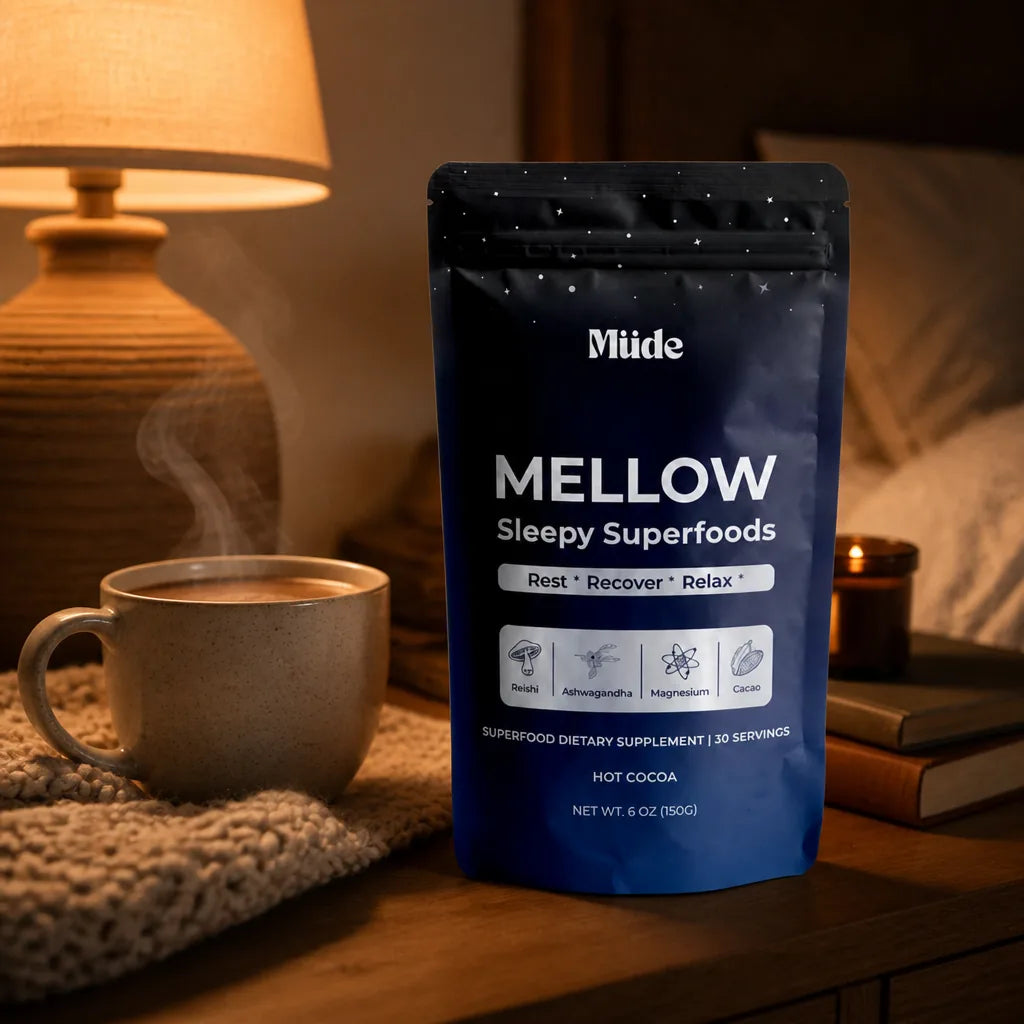


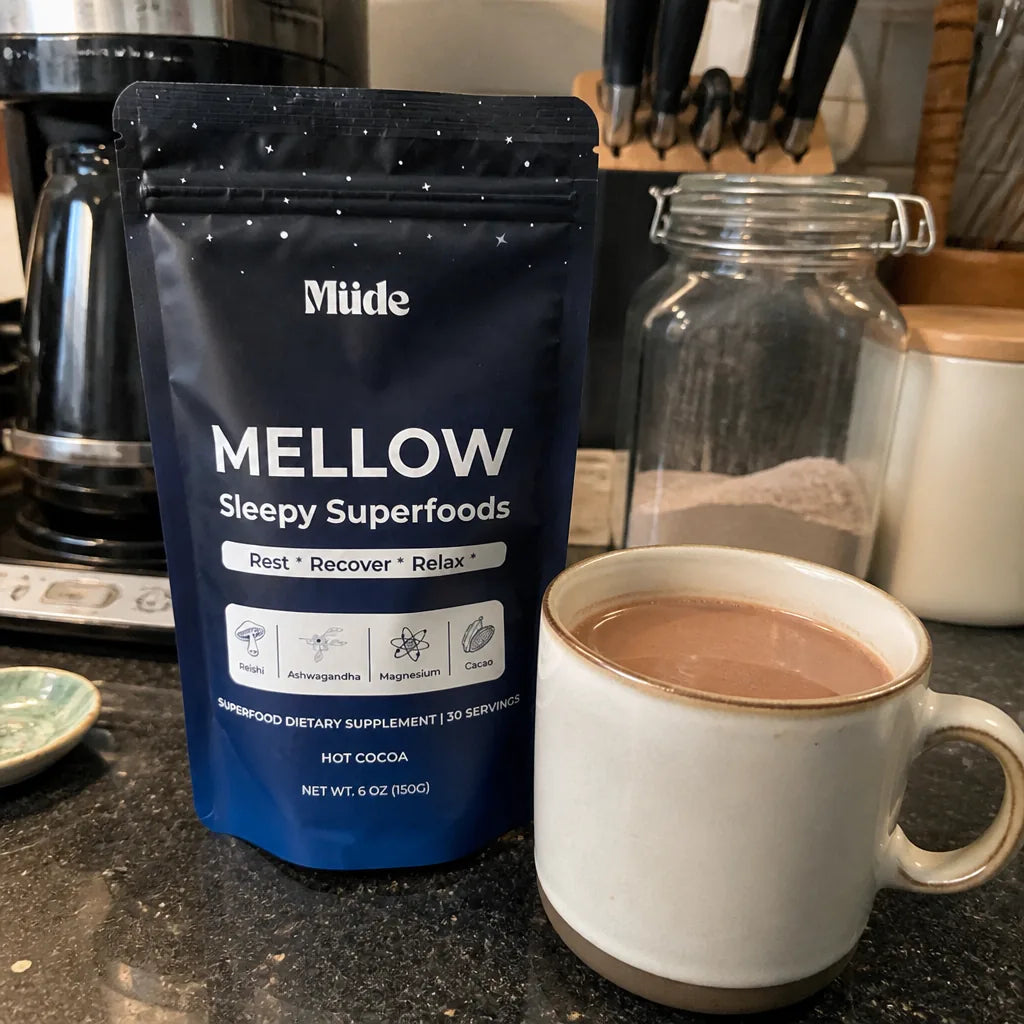


Comment thread shown for illustration; live customer reviews pending.
The fair questions
If it has no melatonin, how does it help sleep at all?
Melatonin only marks the time. These ingredients work on a different lever: calming the evening stress signal and the wired nervous system that keep a body out of deep sleep. That is the half of the night melatonin was never built for.
Is it a sedative that knocks a person out?
No. The ingredients settle the nervous system rather than sedate it. The calm comes on gently, the mind slows, and the body finds its own way down. Settled, not switched off.
Will it leave a foggy morning like melatonin does?
There is no melatonin and no hormone in it, which is the usual source of the fog. Most people report waking clear, which is the whole reason to leave the hormone out.
How is the dosing different from the gummies in the study?
Every amount is printed on the label in full, with no proprietary blends and no rounded-off numbers. It is powder measured by the scoop, not melatonin poured into a candy base, so there is no hormone to run triple the dose.
How long before it works?
The calm tends to show the first night. The deeper adaptogen effect builds over two to four weeks, so a full month is the honest test. One pouch is thirty nights, which is about how long it takes to know.
A random melatonin gummy, next to Mellow
The point is not that melatonin is useless. It is that a shelf full of a mislabeled hormone, aimed at the wrong half of the night, is a strange place to keep looking. Here is the contrast that matters.
| Mellow | A random melatonin gummy | |
|---|---|---|
| Dose you can verify on the label | Yes | Rarely, per JAMA |
| Built for staying asleep (the back half) | Yes | No |
| Clear, unfogged morning | Yes | Often not |
| Non-habit forming | Yes | Debated |
| Melatonin-free (no added hormone) | Yes | No |
| Every amount printed, no hidden blends | Yes | Varies |
Every dose on the label. No proprietary blends, no hidden amounts.
The cost of trusting the label
The quiet cost of the melatonin shelf is not one bad night. It is a person taking a hormone at an unknown dose, on the belief that the label means what it says, for years.
Higher some nights than intended, lower on others, and pointed the whole time at the front of the night while the 3am waking goes untouched. The morning fog gets filed away as the price of sleep.
None of that shows up on the label, because the label was a promise the lab could not confirm. The one number a shopper trusted was the one number the study found least reliable.
Multiply that across a few hundred nights and the picture is a person guessing, every evening, at how much hormone they took, and how much of it would still be with them at dawn.
It does not have to run that way. A formula with no hormone, every dose printed and checkable, aimed at the half of the night that goes missing, is a different bet from the start.

The bet worth making
One path keeps trusting a label a lab could rarely confirm, on a hormone built for the wrong half of the night, and files the morning fog under the cost of sleep.
The other tries a warm cup with no hormone, every dose printed in full, aimed at the back half of the night, for thirty nights.
60-night money-back guarantee · melatonin-free · non-habit forming · 0g sugar
The part that makes the second path easy is that the whole risk sits with the maker, not the person trying it. Sixty nights.
Drink it, sleep on it, give the adaptogens their month to build. If the mornings still start foggy and the nights still break at 3am, send it back and every cent comes back, no phone tree.
The only way to learn which side of that bet holds is to try it, and trying it has been made to cost nothing.
Check if Mellow is in stock →Made in small monthly batches. If it is sold out, that is why.
This is an advertisement, not a news article. Study results describe the individual ingredients or products cited and are not a claim about this product. The JAMA and CDC findings are drawn from published research and refer to the melatonin category, not to any single brand. Reviews shown are illustrative pending verified customer reviews. These statements have not been evaluated by the Food and Drug Administration. This product is not intended to diagnose, treat, cure, or prevent any disease. Individual results vary.