

I never thought I would see the day when I sleep through the night without thinking about it.
Six years. That is how long I woke up somewhere between 2:40 and 3:20 every single night, and then lay there doing math on how tired I was going to be.
If you have lived this, you know that nobody understands it who hasn't.
- … your eyes open on their own, before the clock has told you anything
- … the arithmetic starts (if I fall back asleep right now I still get three hours)
- … the person next to you is breathing like someone with no problems
- … you make the 4:15 decision about whether to give up and start the day
- … and then you get through the whole next day underwater, knowing you will do it again tonight
I was spending eight hours in bed and getting maybe five that counted.
I looked fine. I felt like I was running the day on a phone at nine percent.
If that is your night, there is something you should know.
The reason it happens has almost nothing to do with how tired you are. It has almost everything to do with something your brain is doing roughly two hundred times a night.
You can go back to sleeping through. Most people can.
And you do not need melatonin, a prescription, or a colder bedroom to do it.
What it comes down to is how often the brain surfaces after 2am, and how little it takes to bring it the rest of the way up.
One thing before I go further, because you should have it upfront. I am one of the people who ended up building the drink I describe near the end of this.
You can decide what to do with that when you get there. The six years came first, and that is the part worth your time.
I Was Taking Melatonin Every Night To Feel Like A Person
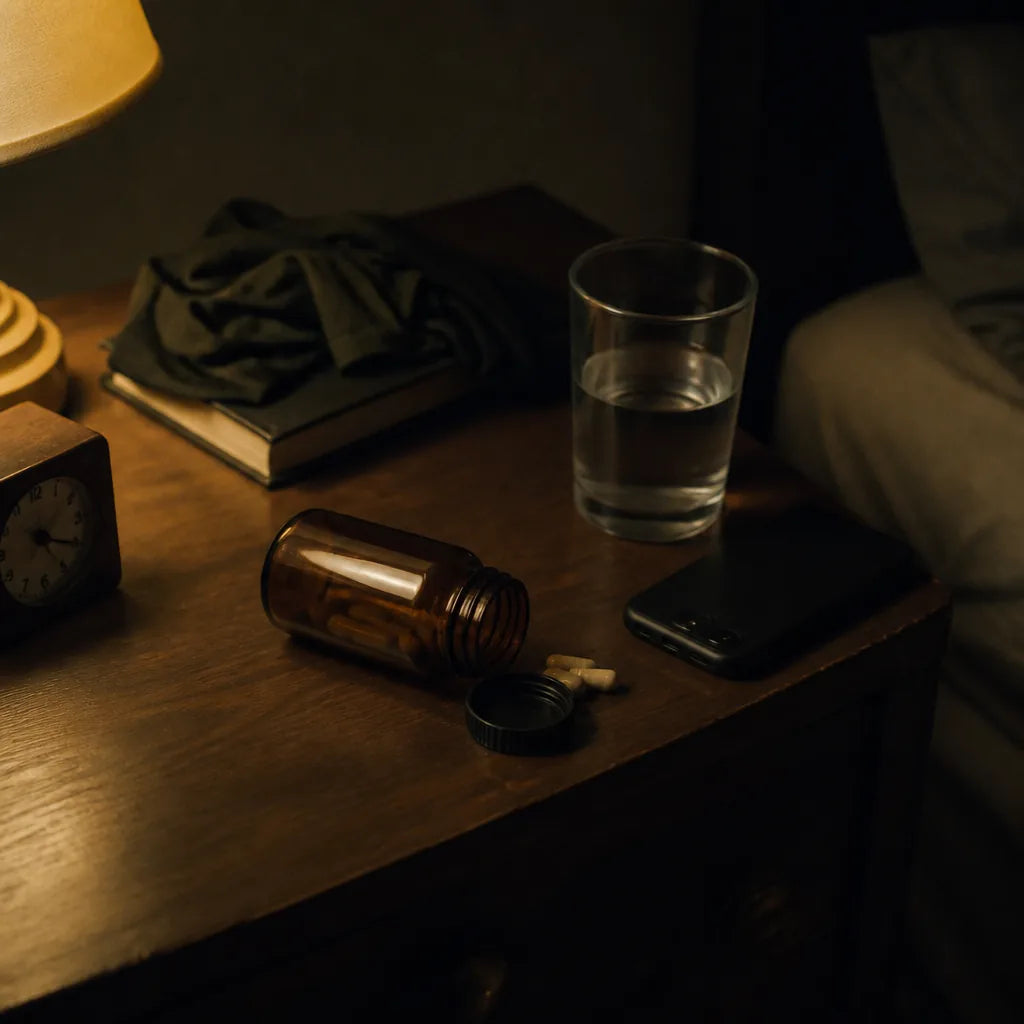
I started at 3mg. Inside a year I was taking 10, because 3 had stopped doing anything at all.
It worked, in the narrow sense. I fell asleep faster.
And I still woke up at 3am.
Then I woke up at 7 feeling like I had been dragged through the mattress backwards.
My doctor told me the sleep study looked normal and that this is something that happens as people get older.
I was told to cut caffeine after noon and try to relax more.
I said thank you. I got in my car. I sat in the parking lot for ten minutes without turning the key.
Was that it? Was I going to spend the next thirty years managing this with gummies and hoping for the best?
I hit a wall that winter.
The Night I Stopped Accepting The Answer

I could not accept that a normal sleep study meant nothing was happening.
Something was happening. It happened every night, at the same time, for six years.
We can sequence a genome and land a rocket on a barge. Somebody had looked at this.
So I stopped feeling sorry for myself and started reading.
Not blogs. The actual sleep research, the studies with polysomnography data in them, the ones written for other researchers.
It took a few weeks of slow reading before I found the thing that reorganised everything I thought I knew.
What A Study Of Ordinary Sleepers Found Happening After Midnight
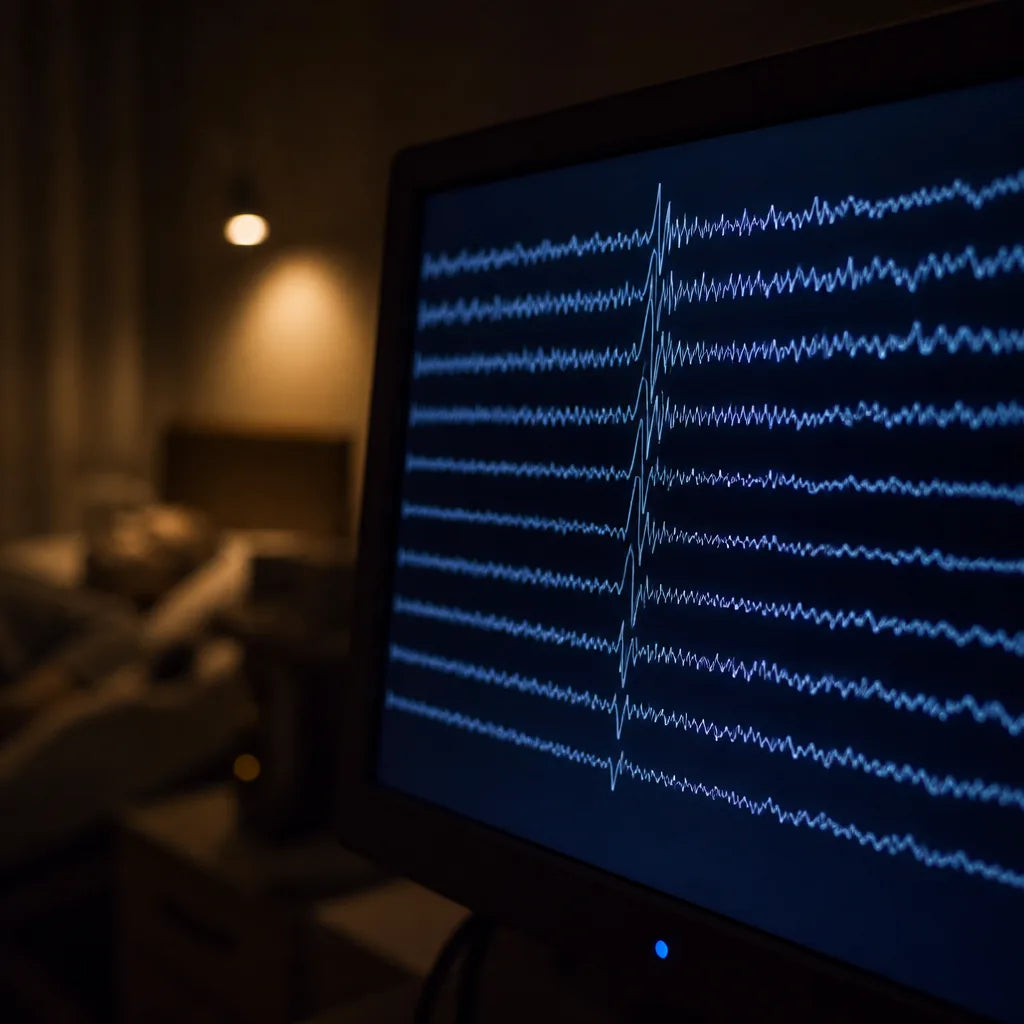
There is a measurement in sleep medicine called the arousal index.
It counts how many times per hour the brain surfaces out of deeper sleep. These are not full awakenings. They last about fifteen seconds.
You do not remember them. That is the whole point of them.
A study published in the journal SLEEP measured that index across ages, in healthy people with no sleep disorder of any kind.
young adults
middle-aged
age 60 and over
Boselli et al., “Effect of Age on EEG Arousals in Normal Sleep,” SLEEP 1998;21(4):361. Healthy volunteers, no diagnosed sleep disorder.
Twenty-seven times an hour. Across a night that is close to two hundred surfacings.
In people with nothing wrong with them.
I read that number four times before it landed.
I had spent six years thinking I woke up once a night. I was waking up all night. 3am was the only one that stuck.
“Almost Everything On The Sleep Shelf Is Built For The First Twenty Minutes”

Here is the part that took me a while to accept.
Sleep aids are tested on how fast you fall asleep, because that is the number that is cheap to measure.
It has a name: sleep onset latency. You put someone in a lab, you time how long until they drop off, you publish the difference.
Hour five is expensive to study and there is no product waiting to be sold against it.
So the shelf fills up with things aimed at a problem I did not have.
I fell asleep fine. I always fell asleep fine.
Melatonin in particular is a timing signal. Its job is to tell the body what hour it is.
The largest analysis of it found it takes roughly seven minutes off the time you spend lying there.
Seven minutes. That is the size of the whole effect.
Melatonin is a doorman. It gets you into the building. It does not work the night shift.
And the big retail doses do something worse than nothing.
A 2024 review of twenty-six trials found that above 5mg you get no extra help falling asleep, and more grogginess the following morning.
The dose that had stopped helping me sleep was the dose still in my blood when the alarm went off.
That was the fog I had been waking up in. I had been buying the fog.
The Half Of The Night Nobody Sells To
Sleep is not one flat block that runs for eight hours.
Deep sleep is front-loaded. Most of it happens in the first stretch of the night, and then it thins out and keeps thinning.
The back half of your night is the lightest sleep you get.
Your sleep gets shallower as the night goes on. That is normal machinery, not a fault.
The problem is what that shallowness does to a surfacing. At midnight there is enough depth to hold you under and you never know it happened. At 3am there isn't, so the same fifteen seconds turns into being awake.
There is a second thing working against you, and it gets worse with every year.
The threshold for waking drops as people age. Standard polysomnography shows it, and it moves in the direction you would rather it did not.
The same noise, the same dream, the same shift of a shoulder. Younger, you sleep through it. Older, you are awake and looking at the ceiling.
Then there is the timing. Cortisol sits at its daily low in the late evening and starts climbing from around two in the morning.
That climb is supposed to happen. It is how a body gets itself out of bed in the first place.
It also lands in the exact window where your sleep has the least depth to spare.
Three things landing at once, every night, inside the same three-hour stretch.
That is how the second half of a night is built, and it arrives for everybody eventually. Nobody is failing at anything.
“So Why Is Everyone Still Selling Melatonin?”

The first twenty minutes is the part people complain about out loud.
“I can't fall asleep” is a sentence anybody can say. “I surface a hundred and eighty times a night and remember one of them” is not something you would ever think to say, because you have no idea it is happening.
You cannot sell to a problem people have no words for.
There is a duller commercial reason too. Melatonin is cheap, it needs no prescription, and it produces a fast noticeable effect on the one number everybody already recognises.
So that is the aisle. Fifty products for the front door and almost nothing for the rest of the night.
What Held Up When I Went Looking For The Other Half
I went looking for the opposite of what was on the shelf. Ingredients with real human trial data pointing at the back half of the night.
Most of what I read did not survive the reading. I threw out far more than I kept.
Three things held up, and one older thing earned a place for a different reason.
Ashwagandha Lowered Evening Cortisol Almost Four Times As Much As Placebo In A 60-Day Trial

In a sixty-day randomised trial, adults taking 300mg of a standardised ashwagandha root extract showed a 27.9% drop in serum cortisol. The placebo group dropped 7.9%.
A later meta-analysis pooling five randomised trials found improvements in how long people took to fall asleep, how long they stayed asleep, and how they rated the quality of it.
It is the strongest human evidence anywhere in this category, and it points at the evening, which is where the second half of the night is decided.
Only One Form Of Magnesium Has Been Shown To Reach The Brain In Meaningful Amounts

Magnesium is the most recommended and most wasted mineral in the whole sleep conversation.
The cheap forms are poorly absorbed. The forms that absorb well mostly stay in the body and never get anywhere near the brain.
Magnesium L-threonate is the exception. The threonate carrier moves through glucose transporters, and it is the only form shown to cross into the brain at levels that do anything.
A six-week trial in 100 adults found improved working memory, faster reaction times and higher heart rate variability.
Paired with magnesium glycinate, which works at the body level, both territories get covered instead of one.
L-Theanine Produces Calm Without Sedation, Which Turned Out To Be The Whole Distinction

Around 200mg of L-theanine raises alpha brain-wave activity within thirty to forty minutes. Alpha is the state you are in when you are relaxed and still perfectly awake.
It is not a knockout, and that is exactly why I wanted it.
Anything that sedates you gets you through the door and then leaves you paying for it on the other side. That was the trap I had already spent six years inside.
The Rest Of It Came From A Formula Written Down Two Thousand Years Before The First Sleep Aid
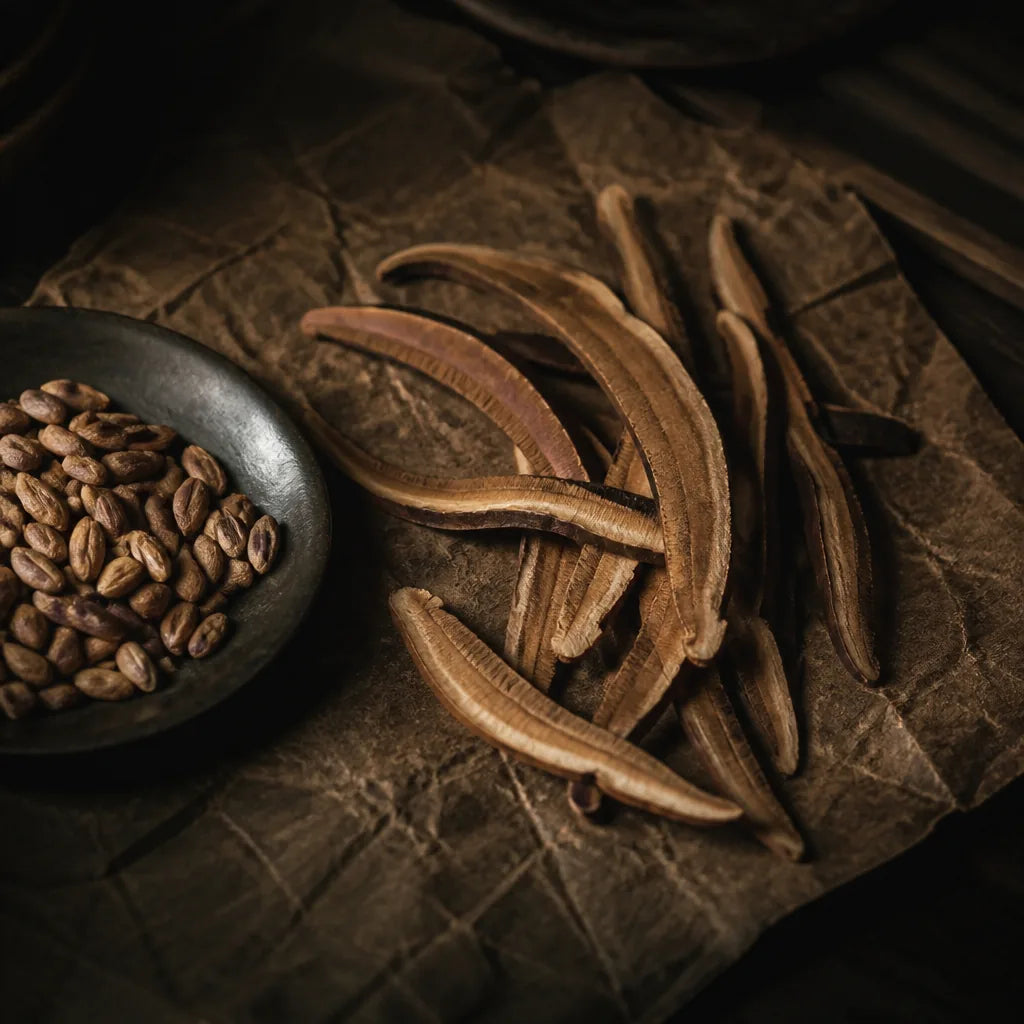
Suan Zao Ren Tang is a Chinese herbal formula recorded roughly two thousand years ago for people who could not stay asleep. Jujube seed is the lead herb in it.
A related classical formula, Tian Wang Bu Xin Dan, adds poria and a small group of calming herbs for the restless-mind version of the same complaint.
I am not going to make a claim about the individual herbs, because the individual human trials on them are thin and I would rather tell you that than dress it up.
What is true is that people were treating the second half of the night two thousand years before anyone invented a gummy, and the formula they arrived at is still in daily use.
So We Built The Thing I Could Not Find On The Shelf
I could not buy a product that did all of it at once.
The ones with the good magnesium had no adaptogens in them. The ones with adaptogens hid the amounts inside a blend and put melatonin in anyway.
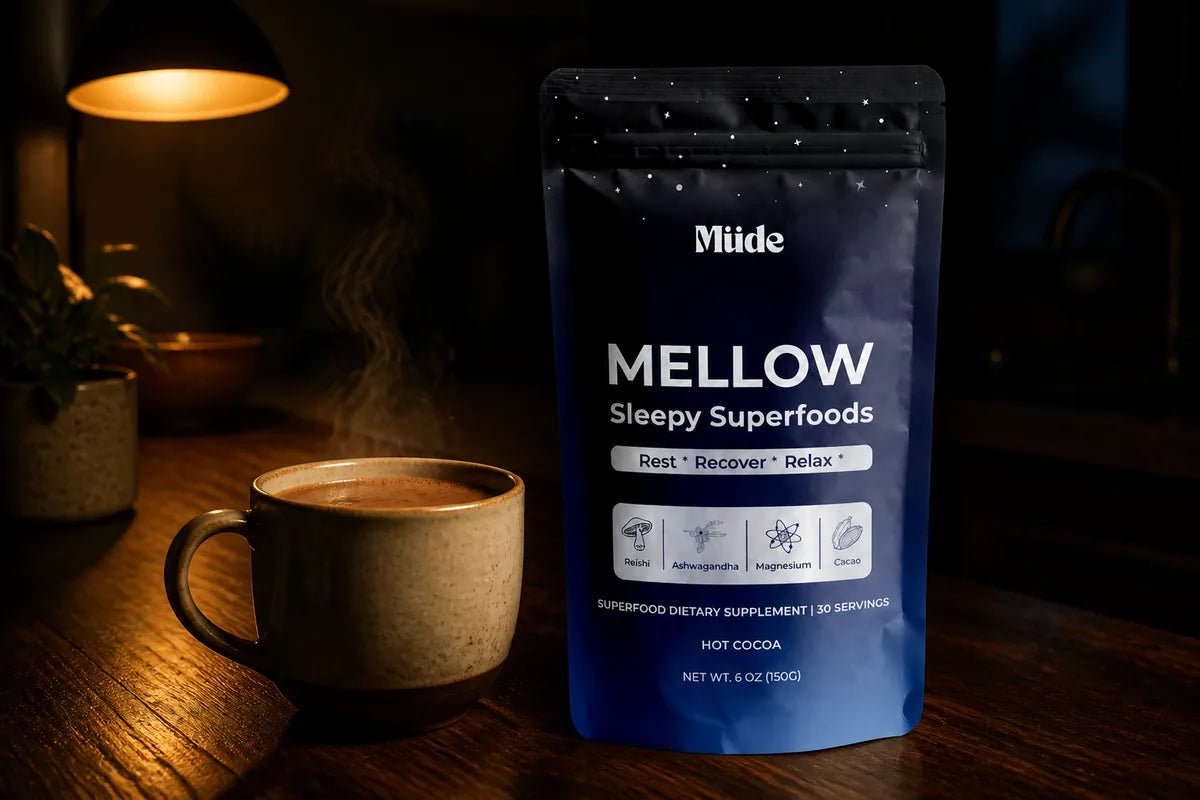
So a small group of us made it. We called it Mellow.
It is a warm cocoa you drink about thirty minutes before bed. One scoop into hot water or warm milk, thirty seconds with a frother, and that is the entire routine.
There is no melatonin in it. That is deliberate, and it is not a marketing decision.
Melatonin was the thing that had not worked for six years. Putting it in would have defeated the entire point of building it.
Mellow · a melatonin-free sleep cocoa built for the back half of the night
- Fall Asleep Faster, Naturally
- Stay Asleep Past 3am
- Wake Up Clear, Not Groggy
- Calm, Never Knocked Out
- No Melatonin, No Hangover
Full ingredient list, dosing and current availability on the product page
The First Week Was Not The Interesting Part

Night one I slept better and I did not trust it for a second. Warm drink, dark room, quiet house. Of course I slept better.
Through the first week the change stayed small enough to explain away, and I explained it away.
Week three is when I noticed I had stopped checking the clock.
That is the honest timeline, and it matches how the research runs. The magnesium and the theanine you notice early. The adaptogens build across a few weeks, because that is the length of the trials they came out of.
I woke up on a Tuesday and worked out that I had not been up at 3am in eleven days.
I had not been counting. That was the part that got me.
What Changes Is The Next Day

Sleeping through the night is not the prize. It is the delivery mechanism.
The prize is that you stop rationing yourself.
You say yes to the seven o'clock thing, because you are no longer protecting a deficit you have to carry into tomorrow.
You get to the end of a conversation with your kid without your eyes going glassy halfway through it.
You stop doing arithmetic in the dark. You stop having a relationship with your ceiling.
You get your afternoons back, and nobody warns you that the afternoons were the first thing you lost.
I did not know how much of me had been going into this until it stopped going into it.
See If Mellow Is Still In Stock →Made in small batches. Availability moves.
What People Say After The Third Week
The Questions I Would Have Asked Before Buying This
Is it going to knock me out?
No, and it is not built to. There is no sedative in it and no melatonin. What you should expect on the first night is that winding down takes less effort than usual, not that something switches you off.
How long before I know if it is working?
The magnesium and the theanine are the parts you may notice in the first week. The adaptogens build across two to four weeks, because that is how their trials were run. If you judge it on night three you are judging it early.
Will I get the morning fog I get from melatonin?
The fog comes from a hormone dose still circulating when your alarm goes off. There is no melatonin in Mellow and no hormone of any kind, so there is nothing to still be circulating.
Can I take it every night without needing it?
It is non-habit forming. Nothing in it is a hormone or a sedative, which is the mechanism behind tolerance creep with the alternatives.
Is this an expensive hot chocolate?
The cacao earns its place. A warm drink half an hour before bed is a real wind-down cue, and it is why people stay consistent past week one.
The rest of the pouch is the two blends, gram weights on the front. Judge it on the label.
How It Compares To What Is Already In Your Cupboard
| Mellow | Melatonin gummies | Magnesium alone | Prescription sedative | |
|---|---|---|---|---|
| Aimed at falling asleep | Yes | Yes | Yes | Yes |
| Aimed at the back half of the night | Yes | No | Partly | Yes |
| Hormone-free | Yes | No | Yes | Yes |
| Works without sedating you | Yes | Yes | Yes | No |
| Brain-available magnesium | Yes | No | Rarely | No |
| Every gram weight on the front | Yes | No | Usually | Yes |
| Doubles as a wind-down ritual | Yes | No | No | No |
If You Do Nothing, You Already Know How Tonight Goes
You will go up at your usual time. You will fall asleep without much trouble, because falling asleep was never the part that was broken.
And then at some point after two, the depth runs out, the climb starts, and you will be awake again with the numbers running.
Tomorrow you will be underwater again, and you will call it a busy week.
You have been calling it a busy week for years.
Or you aim something at the half of the night that has been failing the whole time, and in three weeks you find out whether you are one of the people it works for.
60 nights. Drink the whole pouch. If your 3am has not changed, we refund every cent.
Full refund, no store credit, and you ship nothing back. Reply to your order email inside 60 nights and it is done.
The window runs that long because the adaptogens need weeks. A 14-day guarantee would have been us protecting ourselves instead of you.
Six years is a long time to lose the second half of every night to something nobody had told me was happening.
It was never that I could not sleep. It was that nothing on that shelf was built for the hours where mine kept breaking.
Check Availability And See The Full Label →30 servings a pouch · melatonin-free · 60-night money-back guarantee