The 2:40 Wall, the Twice-Read Email, and the 3 A.M. Ceiling
Three small signals, chased with three separate fixes from three separate aisles. I audited one ordinary day and found a single thread running under all of them.


For two weeks last spring I kept a log of my days. A maintenance log, the kind you keep for a car that makes a noise the mechanic can never reproduce. Every stall, every fog, every 3 a.m. staring session went in with a timestamp.
The entries sorted themselves into three piles. An energy pile, clustered with strange precision around the middle of the afternoon. A focus pile, full of small humiliations, like reading the same four-sentence email twice. A sleep pile, thin and mean, one entry repeated over and over: awake, ceiling, 3-something.
Three piles, three aisles at the store. There is an energy aisle, a focus aisle, and a sleep aisle, and none of them speak to each other. I had shopped all three, and my log said the purchases were losing.
Then a nutrition researcher I was interviewing for a different story said one sentence that folded my three piles into one. The body, she said, runs on a shelf of minerals it cannot make on its own, and when that shelf runs low, the shortage never announces itself as one big symptom. It shows up as static. A little in the afternoon. A little in the inbox. A little at 3 a.m.
Walk through the three signals with me the way they showed up in my log. Then I will show you the thread, because once I saw it I could not unsee it.
The 2:40 wall

You know the scene even if your timestamp differs. Lunch is a memory. The morning's momentum has been spent somewhere untraceable. Around 2:40 the day develops a gravity problem: the chair pulls harder, the screen pushes back, and a document that took twenty minutes at 10 a.m. now wants an hour.
The standard fixes are all borrow-and-repay. The third coffee borrows from tonight's sleep. The desk snack borrows from the 4 p.m. version of the same crash. Nobody audits the machinery underneath, and part of that machinery is mineral.
Magnesium sits inside hundreds of the enzyme reactions that turn food into usable energy, the currency every cell spends. Iron helps carry the oxygen that keeps that furnace lit. Zoom out and nutrition references count roughly 18 minerals the body draws on, and intake surveys keep landing on the same finding: most people run short on several of them. Never catastrophically short. Quietly short.
A slump is a scene, and I am keeping it one. Afternoon energy has a dozen inputs: sleep debt, blood sugar, a meeting that should have been an email. The narrow point is that one of those inputs is mineral, and it is the input almost nobody checks, because a low shelf does not feel like anything. It reads as static, and static gets blamed on age, on workload, on the weather.
The email you read twice
4:10 p.m., says my log, day six. An email from a client, four sentences long. I read it, reached the end, and realized nothing had landed. So I read it again, slower, lips almost moving.
Confusion has drama to it. This had none. The words arrived and slid off, like rain on glass. The second pass took. The small tax was paid, and the afternoon collected the same tax again forty minutes later on a spreadsheet cell I had already checked.
The brain turns out to be a mineral-hungry organ. Zinc and iodine contribute to normal cognitive function, in the careful phrasing nutrition regulators permit, and iron supports the oxygen delivery a working brain leans on hard. An adult brain is roughly two percent of body weight and burns around a fifth of the body's energy, and the machinery doing that burning draws on the same quiet shelf as the 2:40 wall.
Hold the claim to its honest size: minerals are no focus pill, and this article will not dress them as one. The truthful version is smaller and, to me, more interesting. Normal cognitive function has a mineral floor under it, and floors get noticed on the day they sag, never on the years they hold.
Two piles down. The third is the one I resented most.
The 3 a.m. ceiling

Falling asleep was never my problem. Staying asleep was. "3:11," reads the loudest entry in the log, "awake for no reason. Heart fine. Mind idling like a car in a driveway. Ceiling has a water stain shaped like Ohio." Night math is cruel: an hour of lying still costs two hours of the next day, payable at, of course, 2:40.
The sleep aisle answers this with an arsenal, and some of it earns its keep. What interested me was the floor under the aisle. Minerals help the nervous system make its nightly downshift, and they support the normal muscle relaxation that lets a body stay put for seven or eight hours. That is the entire claim, and I am keeping it that small on purpose, because this category has a long habit of promising the moon and delivering a night light.
What matters for the audit is the shape of the thing. A third signal, sold in a third aisle, resting on the same shelf as the first two. Energy leans on the shelf at 2:40. Focus leans on it at 4:10. And at 3:11 the downshift reaches for it too.
The pattern nobody connects
Lay the three piles side by side and the thread is almost embarrassing. Three signals, three aisles, three separate purchases. Underneath, one shared input running low. The interesting question stops being "what fixes the slump" and becomes "why would the shelf be low in the first place?"
Two doors, and both of them moved without anyone announcing it.
The first door is food. Minerals enter the body through what gets eaten, and modern eating trends toward the processed and the convenient, where mineral density is among the first casualties. Surveys of actual intake, decade after decade, find the same handful of minerals coming up short in a majority of adults.
The second door is the one that surprised me, and it is the reason this story ends at a water company. For nearly all of human history, drinking water arrived carrying a payload. It had moved through rock and soil, and it brought dissolved calcium, magnesium, and a whole quiet family of trace minerals along for the ride. Hydration and mineral delivery were the same act. Nobody had to think about it.
Then filtration got good, and this is no complaint. A serious filter catches what is in the water, which is exactly the job. But a membrane does not pause to ask which dissolved things deserved to stay. The bad passengers go, and the payload goes with them. The cleanest water most households have ever had is also the emptiest.
Put the two doors together and the daily baseline dropped. Not with a crash. With a slow leak, running for years. And here is the part that took me weeks to sit with: a low baseline does not feel like a health event. It feels like 2:40. It feels like the same email twice. It feels like a ceiling at 3:11, and a water stain shaped like Ohio.
So the fix has two jobs. Put the payload back. And, while it is in there, deal with the passengers that got through anyway.
The Magnet and the Minerals
The company behind the drops I eventually tried, clnwater, calls its mechanism the Magnet and the Minerals, and the name earns its keep because it describes two separate jobs done by one dropper.
The Minerals half. Fulvic and humic acids are small, intensely charged carrier molecules formed as plant matter breaks down in soil. Their talent is grip. They bind trace minerals and hold them in a dissolved, carried form, which matters because a mineral your water cannot carry is a mineral your gut never gets to meet. Ten drops in a glass of filtered water put the payload back, in the carried form water had for most of history. This supports nutrient absorption, the plain way a delivery truck supports a store.
The Magnet half. Clinoptilolite zeolite is a volcanic mineral with a cage-shaped crystal structure that carries a natural negative charge. In the gut, the cage behaves like a magnet with preferences. It arrives holding its own loosely bound minerals, and when a metal ion such as lead or cadmium drifts near, the cage trades: the loose mineral steps off, the metal binds tighter into the lattice, and the cage moves on through the way everything in the gut eventually does, taking its catch with it. Chemists call the trade cation exchange, and a 2022 review in Frontiers in Medicine described clinoptilolite in exactly those terms, a crystal that swaps ions without changing its structure. The claim worth making, and the only one I will make, is that this supports the body's natural detoxification, in the gut, where the cage travels. Anyone promising more than that is selling past the science.
Carriers bring the trace minerals in. The cage escorts the metal stragglers out. Two jobs, one dropper, and neither job asks you to believe in anything beyond charge and grip.
What this looks like on a counter
Trace is the version of this I have been using since spring: a small frosted bottle with a dropper. Ten drops into a glass of water, morning and night. The drops dissolve clear, and the taste is barely there, a faint mineral cleanness closer to good spring water than to anything from the supplement aisle. My log's only complaint from week one reads, in full: "keep forgetting the night glass."

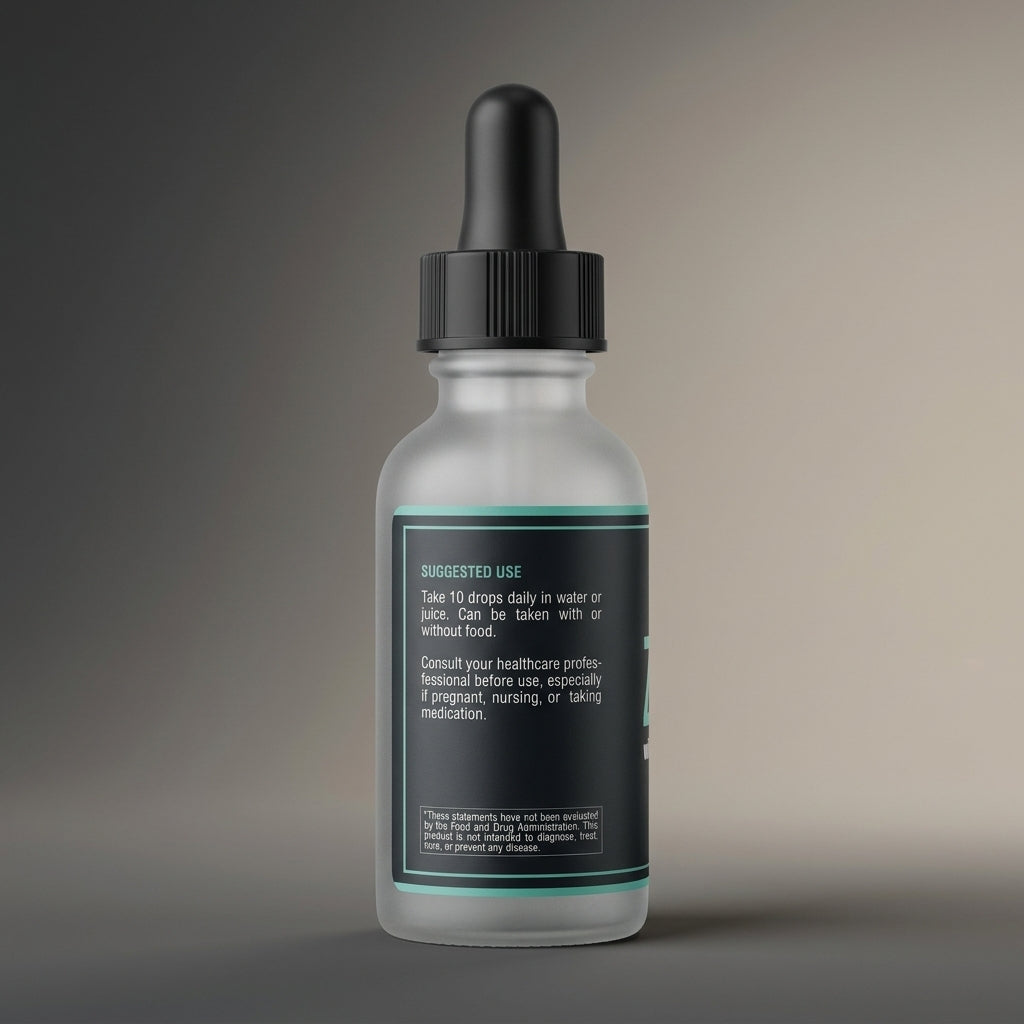
One bottle holds 120 servings, which at morning-and-night pace makes it a 60-day supply. That number is structural rather than generous, for reasons the timeline below makes plain.
The detail that moved me from curious to willing was the lab work. Zeolite as a category has a purity problem: it binds metals by nature, so a carelessly sourced batch can arrive already carrying them, and most brands would rather not discuss it. clnwater publishes a third-party heavy-metal panel for the finished product on the product page itself. Lead within specification, arsenic well under the limit, mercury not detected, cadmium not detected. In a category allergic to receipts, they posted one where every buyer walks past it.
What 60 days tends to look like
Supplement pages love a fireworks timeline. Here is the opposite, assembled from what people in this category commonly report and from my own log, hedged at every rung. None of it is a promise.
Mostly nothing dramatic, and anyone who says otherwise is writing fiction. The ritual is the product at this stage: a glass in the morning, a glass at night, water that tastes faintly cleaner. Some people report the afternoons feel a shade steadier. Some report nothing at all yet.
The stretch where a log earns its keep, because the change people describe is an absence. Fewer entries. A 2:40 slot that goes unremarked for a week. The pattern is what gets noticed, never a single morning, which is exactly why people who track nothing often miss it.
Minerals rebuild on a slow clock. That is the honest reason the bottle holds 60 days instead of a ten-day sample: a baseline that leaked for years does not refill in a weekend, and a fair test of this idea takes the full bottle.
Two fair objections
"Couldn't I just eat better?" Yes, and you should. A varied, mineral-dense diet is the floor everything else stands on, and no dropper substitutes for it. Two honest caveats, though. The same modern pipeline that stripped the water also thinned the food, which is why intake surveys keep finding shortfalls even among careful eaters. And food cannot do the one site-specific thing at issue here: put carried trace minerals back into the specific glass of filtered water on the counter. The drops are a floor under the diet. They were never meant to replace it, and any brand claiming otherwise deserves the eye-roll.
"Detox is a scam." Most of the time, said plainly: yes. The word has been stretched over so much nonsense that flinching at it is the correct reflex, and I flinched too. Which is why the cage half of this story asks for no belief at all. Cation exchange is bench chemistry, published and almost boring, and the finished bottle's heavy-metal panel is public. Strike the entire Magnet half from the record if you like. The Minerals half stands on its own: filtered water lost its payload, and the carriers put it back. That claim requires no faith in the d-word whatsoever.
The 60-day handshake
clnwater backs the bottle with a 60-day money-back guarantee, and the framing is the part I respect. Run the full bottle at ten drops, morning and night. Keep a log if it helps, the pettier the entries the better. If at the end of it you do not want to keep going, reply to your order email within 60 days and every dollar comes back. No promises about what your log will say. In a category where the truthful timeline is measured in weeks, the company carries the risk of the wait, and that is how it should be.
The log, three months on
My maintenance log is still going, out of habit now. The entries have thinned, and I will let you decide what that proves; a sample size of one journalist proves little, which is the whole reason the guarantee matters more than my anecdote. What I can report is the shape of the change: the 2:40 entries stopped being daily, the twice-read emails stopped being worth recording, and Ohio and I meet less often.
The bigger shift was the frame. I had spent years shopping three aisles for what my log now files under one heading: a quiet mineral gap, fed by modern food on one side and excellent filtration on the other. Whatever you do about it, audit your own day first. The timestamps are more honest than the aisles.
Put the payload back in the glass
Trace: fulvic and humic carriers to return the trace minerals, a zeolite cage for the metals that got through. Ten drops, morning and night, dissolves clear, 60-day supply, third-party heavy-metal panel published on the product page, 60-day money-back guarantee.
Get Trace mineral drops → The Magnet and the Minerals: two jobs, one dropper.
Reader comments
the maintenance log line got me. started one last week and the 3am entries are embarrassing. did not expect a water article to call me out like this
Week 4 with the drops here. Hard to describe the afternoons except quieter, which is what the article said would happen. Taste is close to nothing, my coffee has more opinions.
no offense but this reads like every detox ad I have ever scrolled past. what makes the cage thing different from magic beans?
Fair question, and I flinched at the same word. Two differences. The cage trade has a boring chemistry name, cation exchange, described in a 2022 review in Frontiers in Medicine, and the finished bottle's heavy-metal panel is public on the product page. And if you strike the detox half entirely, the mineral half is still the story: filters strip the trace minerals, the carriers put them back. That part asks for no belief.
bought a bottle for my mom, she filters everything and has for years. she says her water finally tastes like the well water from her childhood. she has no idea what a zeolite is and refuses to learn
week two, nothing yet other than the water tasting a bit rounder. sticking it out since the article warned me about this exact stretch. fine
tom, mine showed up around week five and it was less a light switch and more like the author's fewer entries thing. I stopped noticing 3pm, then noticed I had stopped noticing. strangest product experience I have had