Researchers Found The Overlooked “Second Circulation” Behind A Belly That Won’t Go Flat.
Why diets never touch it, and the simple daily habit that gets it moving again.
You’ve done the diets. Keto for a summer. Fasting until noon. Salad at lunch, no bread at dinner, a trainer twice a week. The scale moved a little. Your lower belly didn’t.
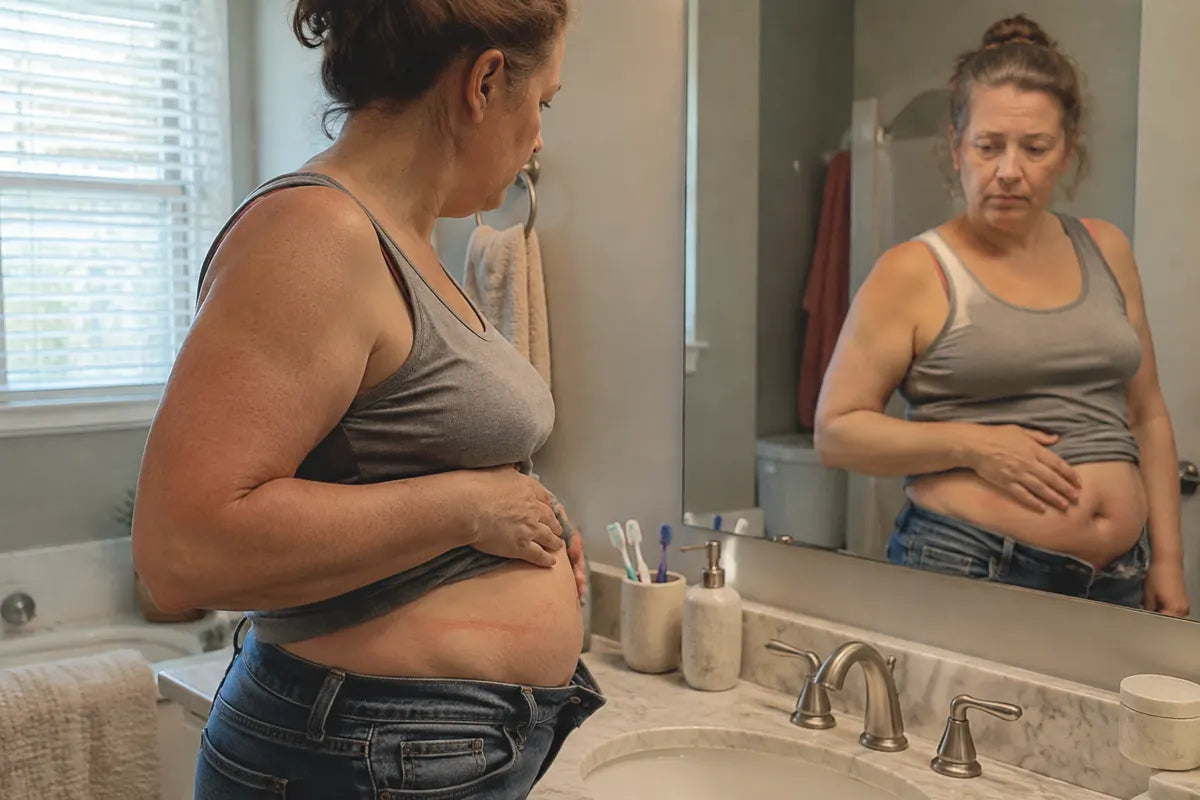
It’s flatter when you wake up. By dinner it’s pushing on your waistband. At night there’s a red line across your stomach where your jeans sat, and another one around your ankles where your socks were.
Most women blame their age, or their willpower. This report starts with one plain question instead: why does a belly stay put through every diet?
The answer is a part of your body most of us never heard about in school. Researchers call it your second circulation. Here are five things they’ve found about it, and the daily habit that gets it moving.
Your blood has a heart pumping it. Your lymph has nothing.
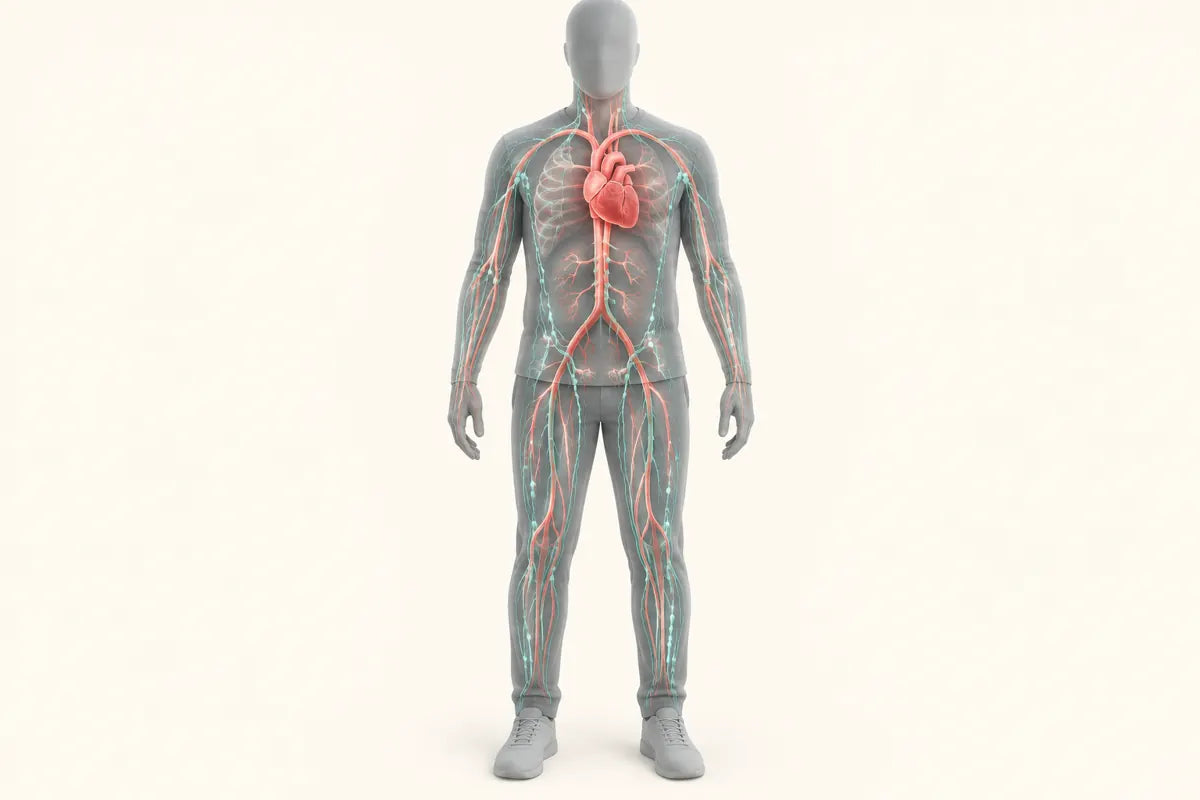
Running alongside your blood vessels is a second set of pipes, your lymph system. It picks up the fluid and waste that seep out into your tissues and carries them back into your bloodstream.
Here’s the part nobody tells you. It has no pump. Lymph only moves when the muscles around it squeeze, or when an artery beside it pulses. Little one-way valves stop it sliding back down.
So when you walk, it moves. When you sit, it mostly waits.[1]
That’s why your rings feel tighter after a long drive than after a long walk.
Everything from your legs and gut drains through your middle
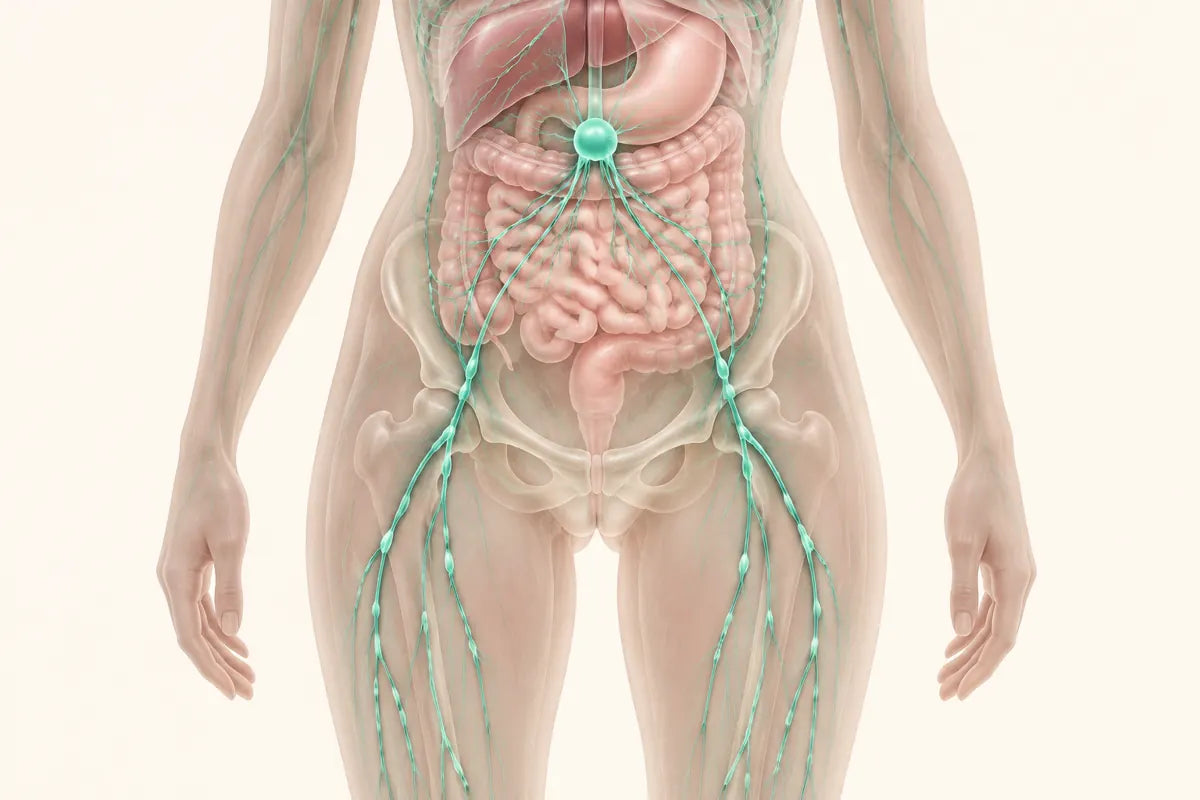
Lymph from both legs, your pelvis and your gut doesn’t take separate routes home. It all collects in one small sac called the cisterna chyli, deep behind your stomach, just in front of your spine.
From there it climbs a single duct up into your chest. On a slow day, fluid from your feet has the longest climb, and all of it has to pass through your middle to get anywhere.
So the two places women notice it first are the two ends of that route: puffy ankles at night, and a lower belly that’s rounder at 6pm than it was at 7am.[2]
If your socks leave a groove and your jeans leave a line on the same evening, that’s the same route backing up.
Eight hours in a chair stalls it
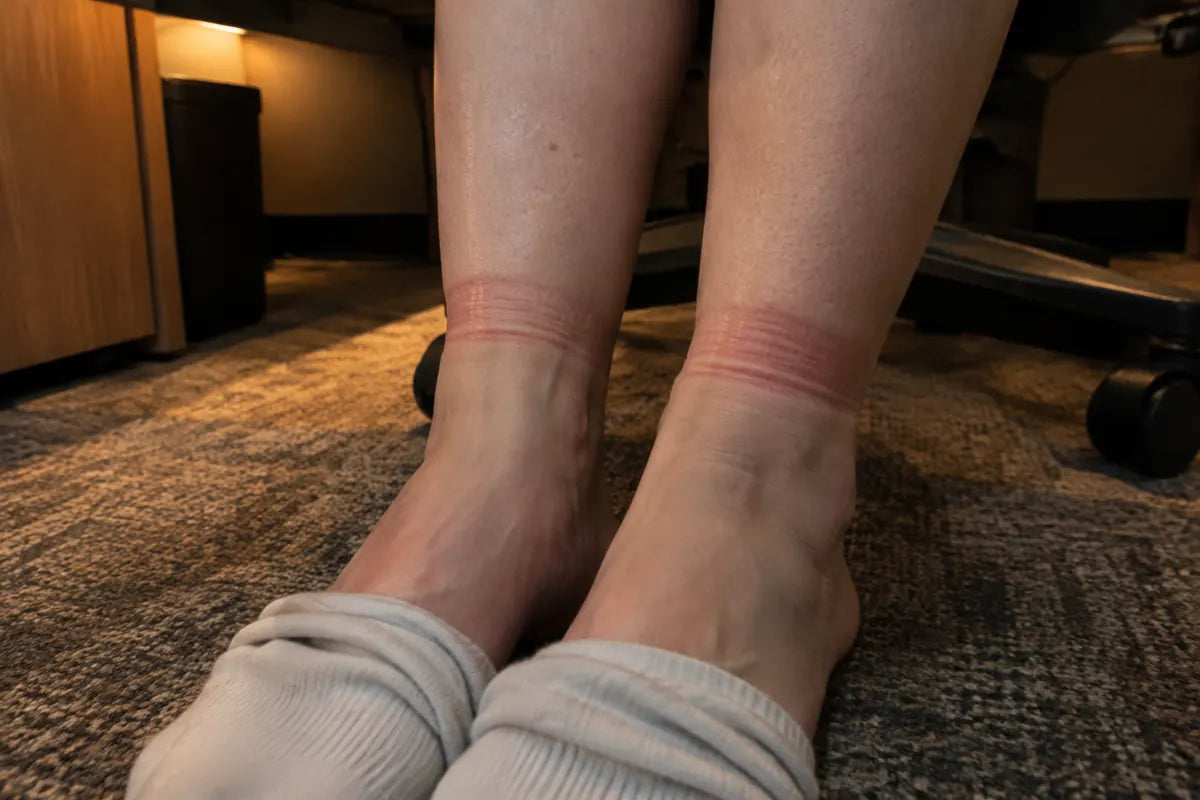
Your calf muscles do most of the squeezing for the lymph in your legs. Every step presses on the vessels and pushes the fluid up a few inches.
Sit at a desk, behind a steering wheel or on the couch for most of the day and those muscles barely move. The fluid stays where gravity puts it, which is low.
That’s the sock groove at 5pm. It’s the waistband that fit at breakfast and digs in by dinner. It’s the “I’m puffier at night” that women over 40 describe all the time and no diet plan ever mentions.
None of that is fat. Fat doesn’t come and go between breakfast and dinner.[1]
Weigh yourself at 7am and again at 9pm. You can’t gain three pounds of fat in one day, but plenty of women see that on the scale.
It slows down after 40
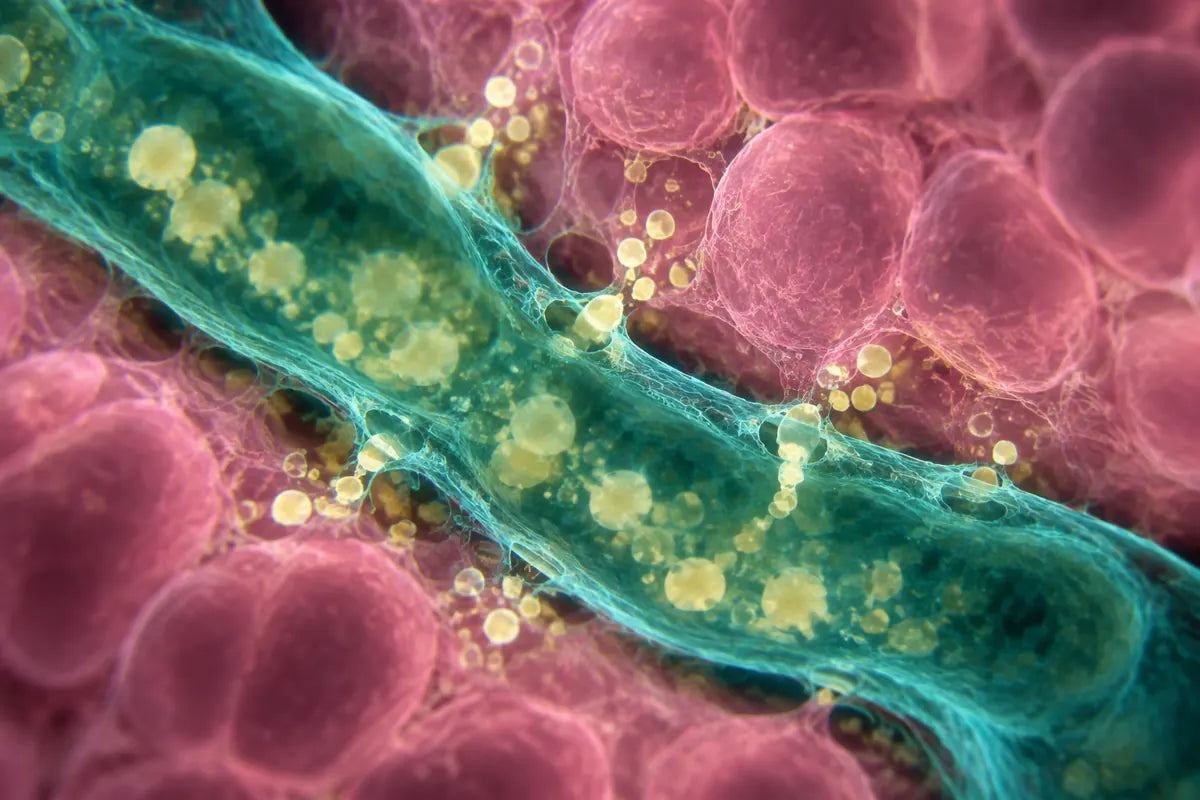
Lymph vessels have their own thin layer of muscle that squeezes in small waves, a few times a minute. In older animals, researchers watched those waves come less often and push less fluid with each one.
One team found the vessels in older rats pumped so weakly that their resting flow dropped. Another found older mice had lost muscle cells in the walls of their lymph vessels.
Most of this work is in rats and mice, so nobody can put an exact number on it for people yet.
But it matches what women describe in their 40s and 50s: same habits, same food, and a belly and ankles that hold more by the end of the day than they used to.[3][4]
Same walk, same lunch you ate at 35, and the waistband still digs in by 6pm.
A diet burns fat. It doesn’t touch what’s parked.
Keto, fasting, cutting calories and crunches all go after the same thing, which is fat. When they work, the scale drops.
But fluid and buildup sitting low in your belly aren’t fat, so the diet has nothing there to burn. That’s how women lose ten pounds and still can’t zip the same jeans.
It works the other way too. In mice bred with leaky lymph vessels, fatty fluid seeped out into the tissue around them, and the mice put on fat.
When researchers fixed the vessels, the extra fat went away. Fat and your second circulation affect each other, and a diet only works on one of them.[5]
That’s why ten pounds off the scale can still leave the same pooch over your waistband.
Give the buildup somewhere to go
The report ends with what helps. Walk for ten minutes after dinner, because every step squeezes your calves. Put your feet up on the couch at night instead of letting them hang. And give what’s parked an exit.
That’s where Trace comes in.
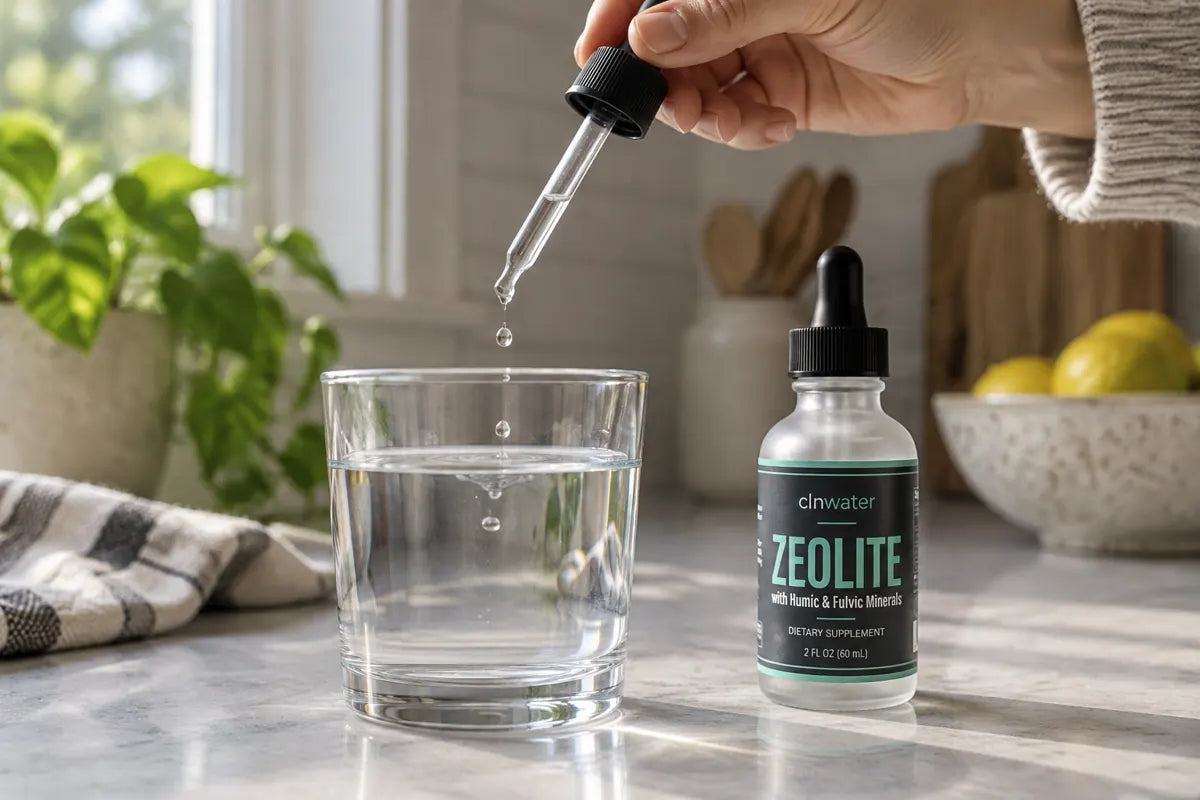
Zeolite is a volcanic mineral with a cage-shaped structure. In the gut it binds the buildup your body has been holding onto and carries it out when you go, and the fluid that was holding it goes with it.
The humic and fulvic minerals from shilajit keep your gut moving so it leaves.
You take it in the water you already drink: ten drops in a glass, morning and evening. One bottle lasts 60 days.
Ten drops in the glass of water you already drink every morning.
Try Trace with 20% offTry the daily habit from finding 6
- Zeolite binds the buildup in your gut and carries it out
- Humic and fulvic minerals keep things moving so it leaves
- Waistband and ankles looser in 2 to 3 weeks
- 60-day money-back, bottle opened or not
One bottle is 60 days: 10 drops in a glass of water, morning and evening. If your belly isn’t flatter, reply to your order email within 60 days and get every dollar back. Bottle opened or not, nothing to ship back.
Questions
Is Trace a water pill?
No. A water pill makes you pee out water for a few hours. Trace binds buildup in the gut and carries it out, and the humic and fulvic minerals keep things moving so it leaves.
Do I still need to walk?
Yes, it helps. Walking squeezes the lymph in your legs. Trace handles the buildup in your gut. They work on different ends of the same problem.
How fast does it work?
Most women notice more bathroom trips in week 1, a looser waistband in week 2, ankles by week 3 and a flatter belly by week 4. Give it the full 60 days.
What if it doesn’t work for me?
Email within 60 days for every dollar back, bottle opened or not, nothing to ship back.
- Cleveland Clinic. Lymphatic System: Parts and Function. my.clevelandclinic.org
- Kenhub. Cisterna chyli: anatomy and drainage. www.kenhub.com
- Nagai T, Bridenbaugh EA, Gashev AA. Aging-associated alterations in contractility of rat mesenteric lymphatic vessels. Microcirculation, 2011. pmc.ncbi.nlm.nih.gov
- Zolla V, et al. Aging-related anatomical and biochemical changes in lymphatic collectors impair lymph transport. Aging Cell, 2015. pubmed.ncbi.nlm.nih.gov
- Escobedo N, Oliver G. The Lymphatic Vasculature: Its Role in Adipose Metabolism and Obesity. Cell Metabolism, 2017. pmc.ncbi.nlm.nih.gov
This page is an advertisement for Trace by clnwater. The research summaries above describe published studies, several of them in animals. Trace is a dietary supplement. Results vary.