
6 Reasons Your Stomach Looks Bigger by Dinner Even When You Are Losing Weight
If your jeans button in the morning and press into your stomach by dinner, cutting another meal can leave you hungrier without fixing the pressure.
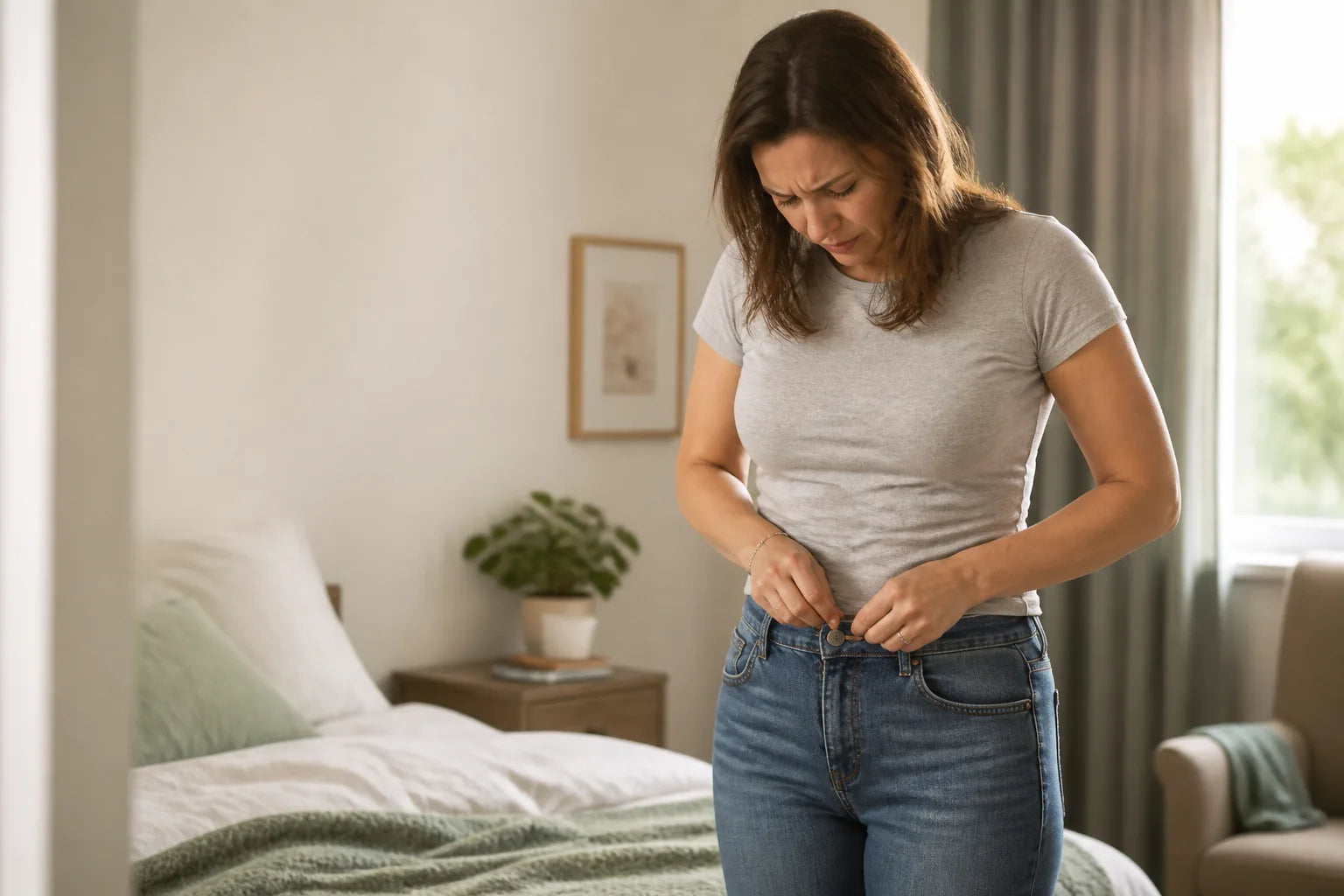
When the same jeans feel different across one day, another smaller meal may be attacking the wrong problem.
You get dressed in the morning and the jeans button. You catch your reflection and think the diet may finally be working.
Then lunch happens.
By 4 p.m., the waistband cuts into your stomach. You pull your shirt forward before you stand up. If you are going out that night, you change into the loose black top again.
You blame the sandwich. You blame yourself for eating the sandwich. The next morning, you skip breakfast and promise to be stricter.
But this has happened with salads. It has happened after fasting. It has happened during the weeks when you weighed every bite and stayed under your calorie target.
The most frustrating part is not the number on the scale. It is feeling as if your body can change shape between breakfast and dinner, while every piece of advice tells you to eat less and try harder.
You are not imagining the change. You are also not gaining that much fat in an afternoon.
Body fat changes slowly. Water and food can change what you see much faster. So can stool, gas or abdominal distension. Researchers are also studying how repeated exposure to certain environmental chemicals can affect fat cells and metabolic signaling.
That does not mean calories stopped mattering. It means another smaller dinner cannot do every job your body needs done.
Here are six reasons the stomach you see at night may not tell the truth about the fat you are losing, and why another punishing cleanse keeps missing the same step.
Your jeans fit in the morning and hurt by dinner
You know this pattern before you ever step on a scale.
The button closes easily at 8 a.m. After lunch, you sit differently because the waistband presses into your lower stomach. By dinner, you are holding your stomach in for photographs or keeping your jacket closed.
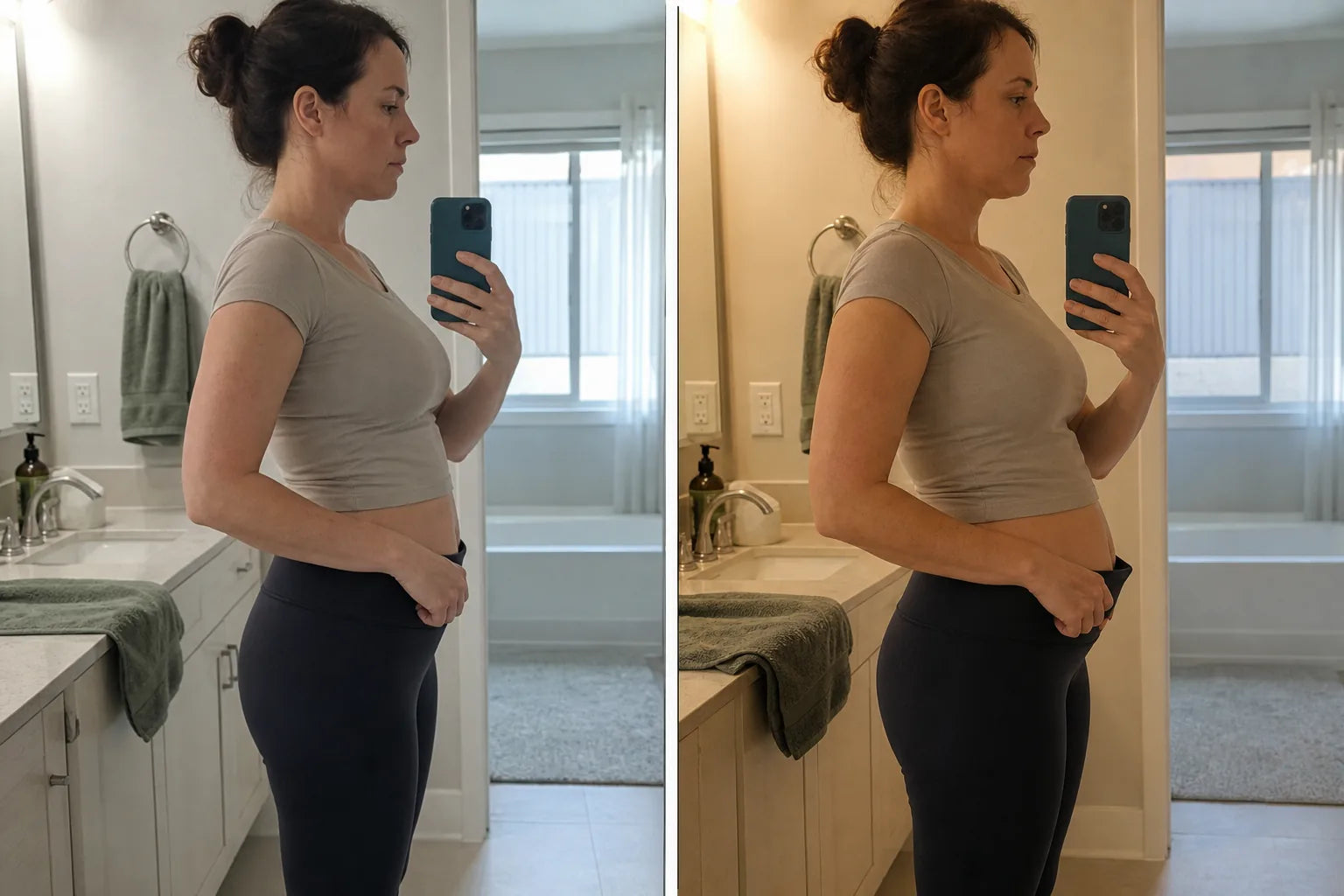
That fast change cannot be explained by new body fat. A scale measures body tissue and water. It also counts food, stool and stored carbohydrate. Your jeans register the space taken up by a meal and any abdominal distension that follows.
This is why one “good” weigh-in can make you feel thin and one “bad” weigh-in can ruin the next 24 hours, even when your actual fat-loss trend barely changed.
The mistake is treating every tight waistband as an order to remove more food. You end up hungry and tired. Some women become scared to eat before a social event. The afternoon pressure is still there.
That matters because fat loss may already be happening underneath the daily water and gut weight. You can be making progress and still hate how your stomach looks after lunch.
The first step is to stop using your evening waist as proof that you failed.
Eating less has not fixed the stomach you keep trying to hide
You already tried being disciplined.
You removed dessert. Then bread. Then breakfast. You ordered the lowest-calorie meal and watched everyone else eat what they wanted. Maybe the scale dropped for a few days, but the heavy afternoon feeling stayed.
So you became stricter.
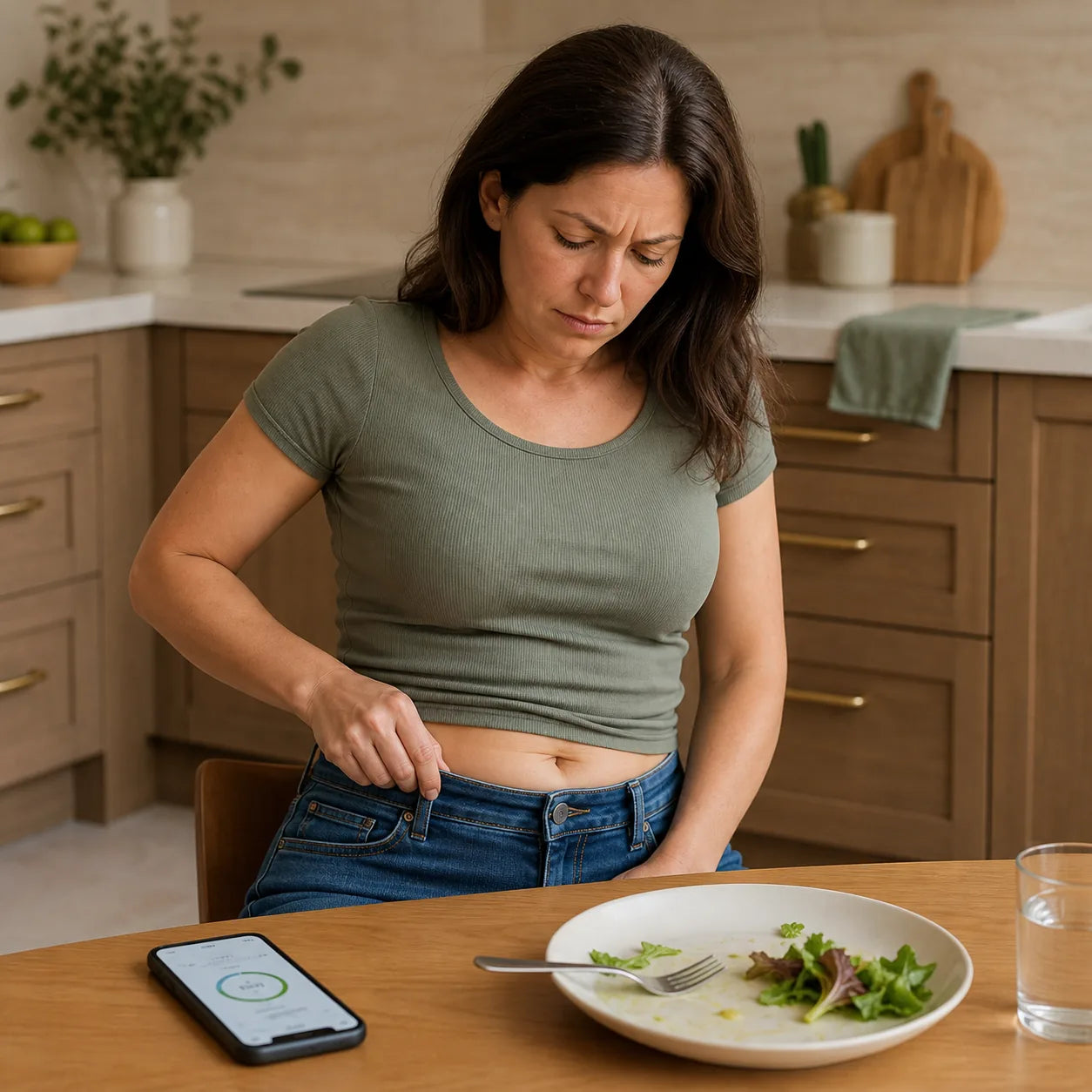
This is where a normal fat-loss plan turns into punishment. You are using less food to solve every possible reason your stomach looks swollen. Less food can create a calorie deficit. It cannot identify water retention, move stool normally, prevent every food reaction, or support binding inside the gut.
It also cannot change the fact that modern food and water can bring repeated low-level exposure to compounds a calorie tracker never counts. Rice can contain arsenic. Some fish can contain mercury. Cocoa products have faced scrutiny for cadmium and lead. Packaging can add contact with plastic-related chemicals.
A calorie tracker records energy. It does not record arsenic, mercury, cadmium, lead or chemicals from packaging.
Your calorie target can still be working. Gut support is a separate part of the routine.
The cleanses that drop the scale keep bringing the bloat back
The promise is almost impossible to resist: take the tea tonight, wake up lighter tomorrow.
Sometimes the scale does drop. There is less food in the gut and less stool. Stored carbohydrate and its accompanying water may fall during fasting. A laxative can send you to the bathroom repeatedly.
For one morning, your stomach may look flatter.
Then you drink water, eat a normal meal, and watch the number return. You think you gained the weight back. You start another cleanse and spend another day close to a bathroom.
The lower number reflects less water and gut content. Sustainable fat loss still takes time.
The worst part is what it does to your head. A dramatic overnight drop makes ordinary, gradual fat loss feel too slow. A normal meal feels like a setback. Hunger and diarrhea start to feel like evidence that the product is working.
A useful daily routine should fit beside the meals you eat and a normal workday. It should not require starvation, laxatives, or the drained feeling companies rename a “detox reaction.”
“My bloating is way down and I don't feel heavy every afternoon. Easy to stay consistent with.”
Losing fat can raise stored pollutants in the blood
Fat tissue can store certain persistent environmental pollutants. In studies of people who lost significant amounts of weight, blood concentrations of many stored compounds rose as fat tissue shrank.
A review covered 17 human studies and 2,061 participants. Weight loss in those studies ranged from 4.4 to 64.8 kilograms, and most measured pollutant concentrations increased. The authors stressed that the health benefits of weight loss still outweighed the potential risks.
The studies did not show that losing a few pounds causes bloating or that Trace changes pollutant levels in the blood. They explain why a calorie target does not provide binding support inside the digestive tract.
A calorie deficit helps shrink fat tissue, and enough protein helps protect muscle. Walking makes the deficit easier to maintain. If you want gut-binding support, it has to come from a separate step inside the digestive tract.
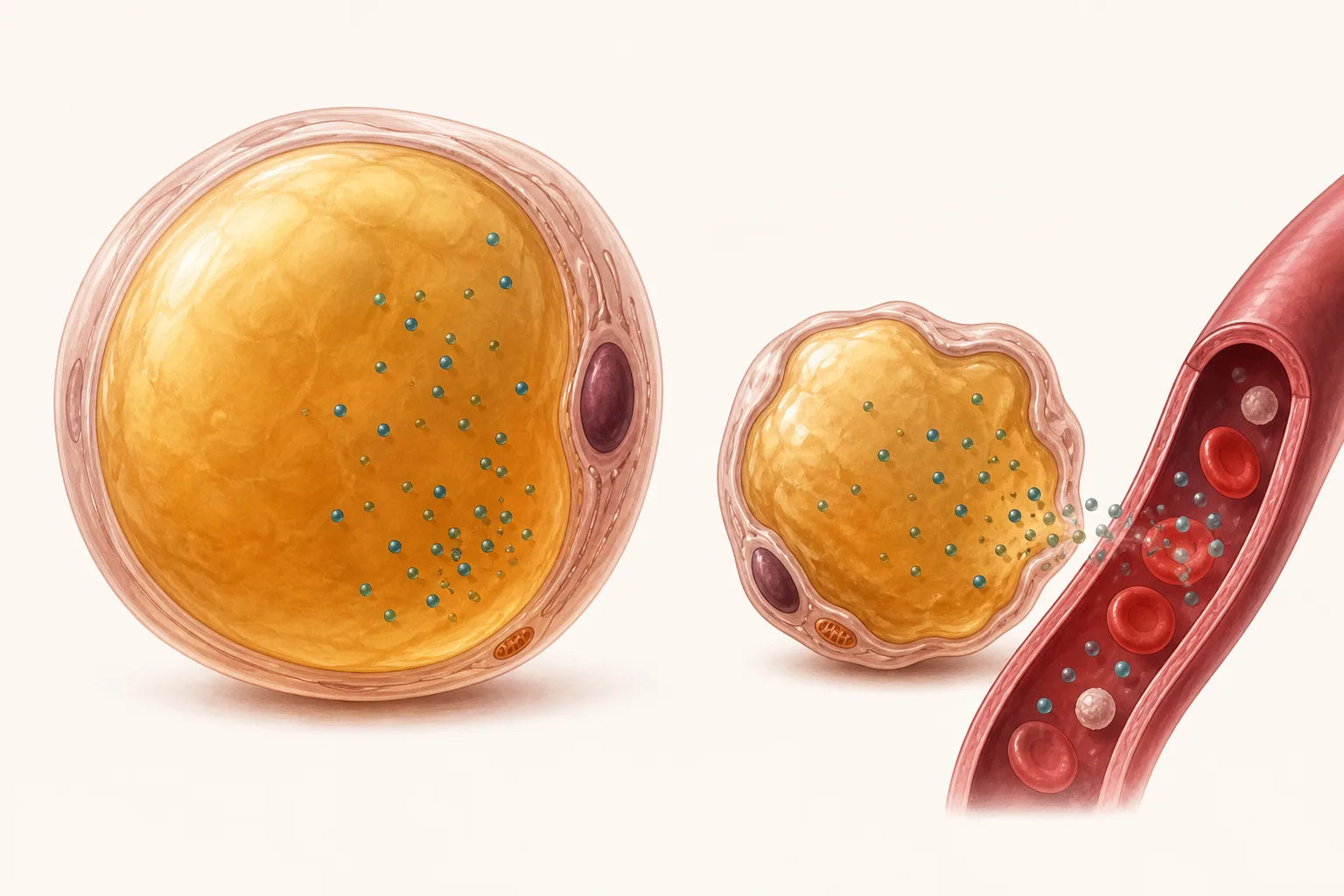
An oral binder works inside the digestive tract, where it can make contact before leaving in stool.
The next study tested that gut-binding step directly.
Gut-binding support works beside the meals that help you lose fat
A binder has one practical place to work: inside the digestive tract.
In a randomized human trial, 42 healthy adults took a purified clinoptilolite product or a comparison before receiving a small oral lead tracer. The group taking clinoptilolite showed about a 90 percent reduction in uptake of that tracer.
The study did not test Trace. It did not test fat loss or bloating. It supports a narrower and important point: purified clinoptilolite can bind inside the gut and reduce uptake of an oral tracer under controlled conditions.
Eating less changes energy intake. Clinoptilolite binding happens inside the gut.
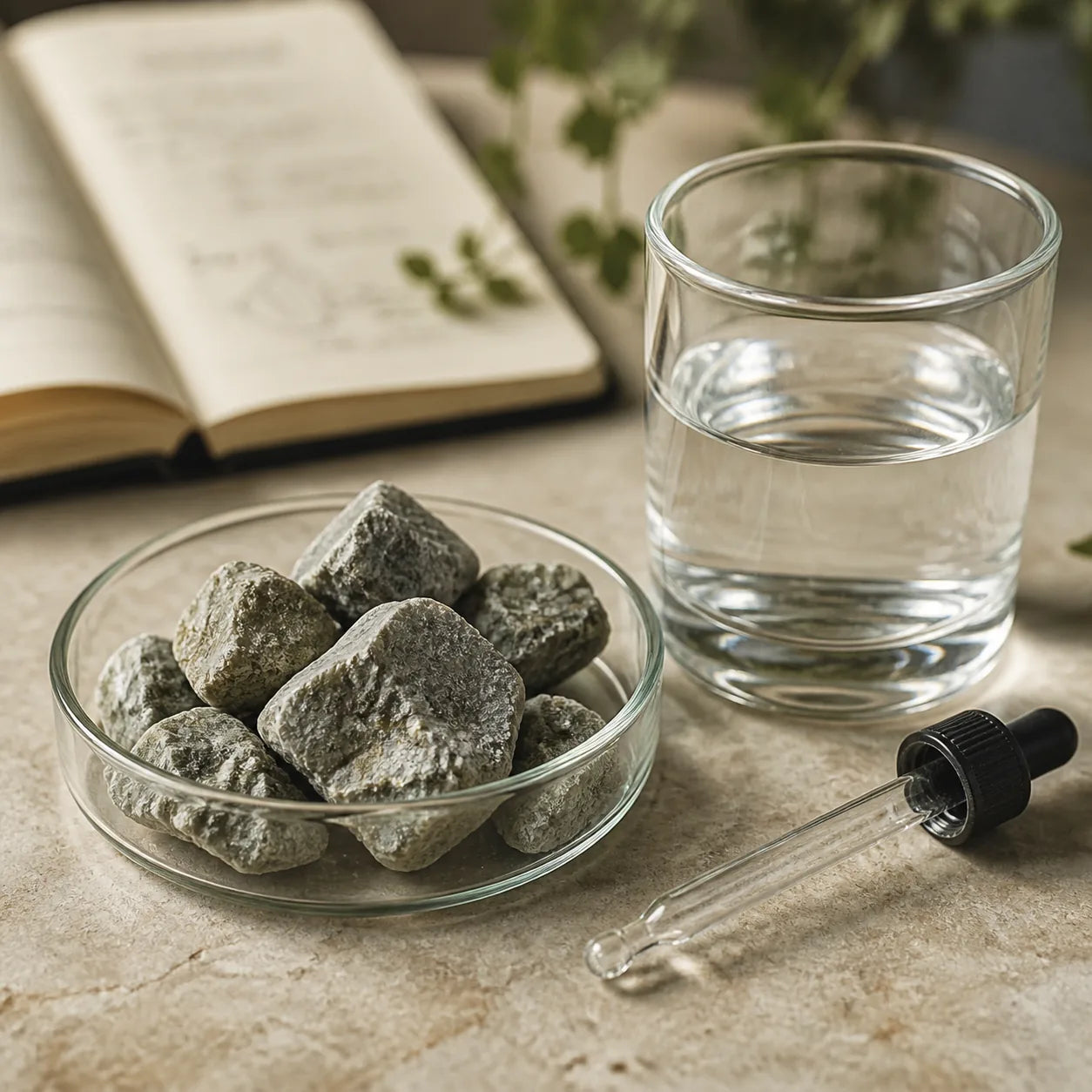
A normal dinner feeds you. A gut binder provides binding support inside the digestive tract. Both can fit in the same routine.
A bathroom emergency shows that stool and water moved quickly. It does not prove that binding took place.
Trace supports the gut without another harsh cleanse
Many cleanse routines ask you to choose between two incomplete options.
A plain binder provides gut-binding support but leaves mineral support to another bottle. Plain mineral drops add minerals but do not include zeolite. Laxative teas move water and stool, then leave many people feeling depleted.
Trace combines gut-binding and mineral support in one daily routine.
The formula combines zeolite with shilajit-derived humic and fulvic compounds. Zeolite provides the gut-binding support. The humic and fulvic compounds provide mineral support in the same measured routine.
The directions call for 10 drops twice a day. One bottle contains 120 servings, described as a 60-day supply. There is no multi-day fast and no reason to plan your day around a bathroom.

| What you tried | What it does | What it leaves out |
|---|---|---|
| Cutting more calories | Creates a larger energy deficit | Does not add gut-binding or mineral support |
| Laxative cleanse | Moves stool and water quickly | Can leave you depleted and create a temporary scale drop |
| Plain mineral drops | Adds mineral compounds | Does not include zeolite gut-binding support |
| Trace | Pairs zeolite with humic and fulvic compounds | Fits beside your existing fat-loss habits |

Feel less heavy after meals without another harsh cleanse
Zeolite gut-binding support plus humic and fulvic mineral compounds. Ten drops twice daily.
Check availability2–4 Pounds Down, Fewer Bloated Afternoons, and Less Pressure at Your Waistband
Two weeks is long enough to judge a trend. A steady calorie deficit can produce about 2–4 pounds of weight loss in that window. Your calorie deficit drives the loss. Trace adds zeolite gut-binding support plus humic and fulvic mineral support while you keep the eating plan that creates the deficit.
Write down morning weight, morning waist, and how hard your waistband presses by late afternoon.
Keep your calorie target steady. Look for fewer heavy afternoons and smaller jumps on the scale.
Compare both seven-day weight averages, then check inches lost and the change from morning to afternoon.
See if Trace helps you feel lighter and more comfortable after meals
You have already done the calorie counting. Add the gut-binding and mineral-support step without another punishing cleanse.
Check availability