The water finally tastes clean. We stopped buying cases of bottled within the first week.
The Source Water Filter Pitcher
Tap water without the lead, chlorine taste, and the contaminants a basic pitcher misses. Cleaner, better-tasting water on your counter, no plumber and no plastic bottles. Reduces listed contaminants; results vary by source.
The stuff your tap is allowed to leave in
Legal limits were set decades ago and sit well above the health-based safe level. Here's what the filter targets, and why it matters to you.
Leaches in from old pipes and solder. No level is considered safe, especially for kids and pregnancy.
Added to disinfect, but it's what gives tap water that pool taste and smell.
Industrial compounds that don't break down and now show up in most US tap water.
Form when chlorine meets organic matter. Linked to long-term health concerns.
The grit and cloudiness that comes through on older municipal lines.
Calcium and magnesium stay in, so your water tastes like water, not nothing.
Reduction performance certified to NSF/ANSI 53, 401 and P473. Actual reduction varies with your source water.
Run your tap through it
Tap the button and watch the contaminants drop out. The minerals that make water taste good stay in.
Four stages, so nothing slips through
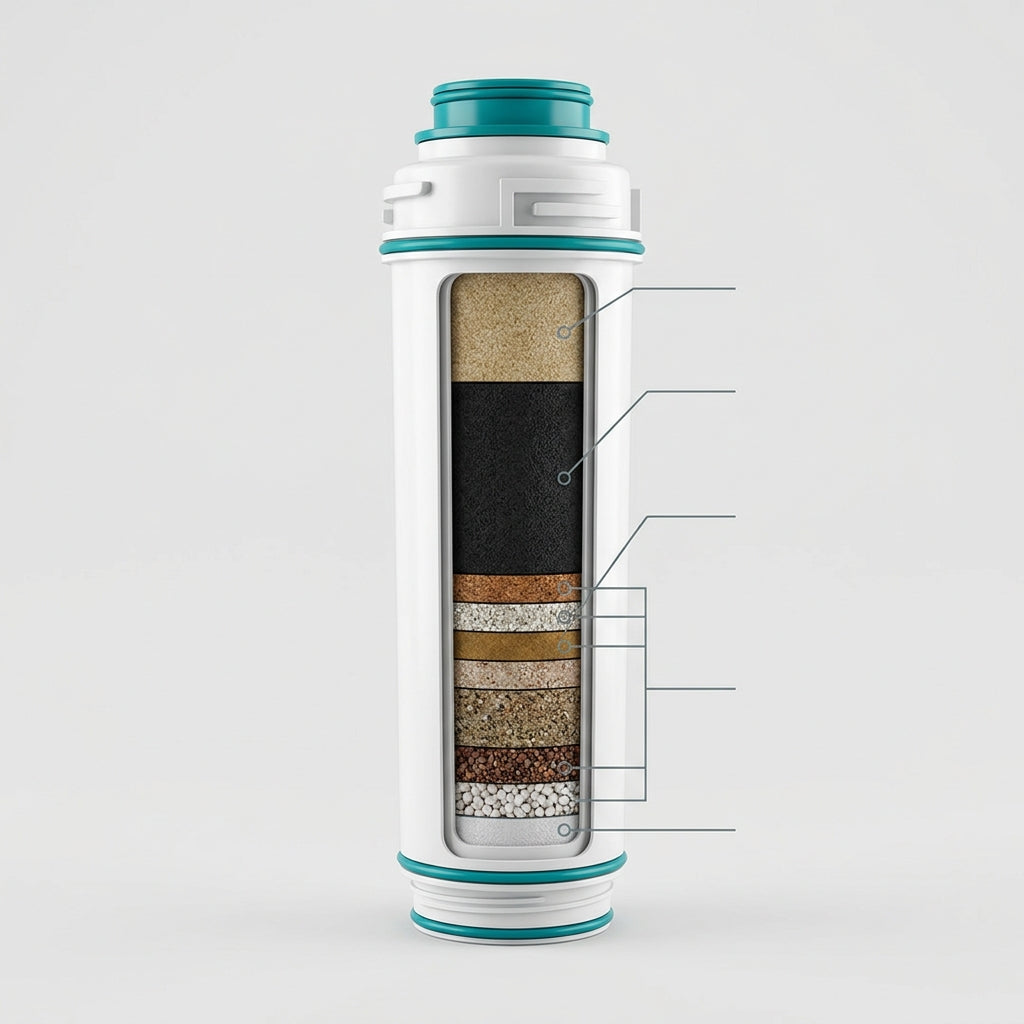
A pitcher runs water through one screen. clnwater runs it through four, each catching what the last one can't.
Sediment screen
Catches rust, grit, and the cloudiness from older municipal lines.
Carbon block
Pulls out chlorine, that pool taste, and the byproducts behind it.
Lead & PFAS media
Targets dissolved lead and the forever chemicals most filters skip.
Mineral polish
Leaves calcium and magnesium in, so the water tastes crisp, not flat.
Certified to the standards most brands quietly skip
Plenty of filters say “tested to” a standard. That's not the same as being certified to it. Our media is held to the real NSF/ANSI standards, and we point you to them so you can check instead of taking our word.
On your counter and pouring clean water by tonight
No tools, no plumber, no holes in your cabinet. If you can fill a kettle, you can set this up.
Unbox & rinse
Run water through the filter once to prime the media.
Drop it in
Seat the filter in the unit and set it on the counter. That's the install.
Fill the top
Pour tap water in. It filters through on its own, no hookup needed.
Pour & go
Clean water on tap. Swap the filter about every 6 months.
All the filtration. None of the plumbing.
Most pitchers miss lead and PFAS. Reverse osmosis strips the minerals your body needs and wastes 3 gallons for every 1 it cleans. The Source Water Filter is the middle path.
Figures from public pricing and third-party reviews, 2026. Replacement cadence affects total cost.
Cheaper than the cases you're already buying
Drag to your household's habit and see what a year of clean water costs each way.
Households that stopped buying bottled

The water finally tastes clean. We stopped buying cases of bottled within the first week.

We were spending almost $40 a month on bottled. This paid for itself before the second case we didn't buy.

I checked the certification myself before buying. It's the real thing, and the kids actually drink the water now.
Set it up in two minutes, no plumber. The pour is fast and the water is genuinely better.
We live in an older home with lead pipes. This was the easiest way to feel okay about our tap again.
No more hauling cases from the store. One filter every six months and we're done. Wish we'd done it sooner.
Good to know before you buy
Does it really reduce lead and PFAS? +
Do I need a plumber or any tools? +
How often do I replace the filter? +
Will it strip the minerals out like reverse osmosis? +
How is this different from a Brita pitcher? +
What's your return policy? +
Love it, or your money back.
Try it for 60 days. If your water doesn't taste cleaner, email us for a full refund. No returns to ship, no questions asked.