
You Did Everything Right Today. So Why Does Your Stomach Look Bigger by Dinner?
You tracked every bite and stayed under your calories. By late afternoon, your stomach still feels swollen, your clothes feel tighter, and you are wondering what you did wrong.

A stomach that changes between breakfast and dinner is showing more than a change in body fat.
It is 4:17 in the afternoon. You have eaten the lunch you planned, entered every ingredient into the app, and stayed inside the calorie target that was supposed to move the scale.
Your stomach still presses into the waistband of the jeans that fit this morning. You pull your shirt forward before walking past a mirror. Dinner is three hours away, yet you already feel as if you ate too much.
This is where another sensible week starts to fall apart.
You open the food log and look for the mistake. The dressing gets blamed. The serving of chicken starts to look suspicious. You decide tomorrow's lunch needs to be smaller, cleaner, or later.
By bedtime, one uncomfortable afternoon has turned into a verdict on your discipline.
You are tired of doing the work and seeing the wrong result
The frustration runs deeper than a number. You have already learned how weight loss is supposed to work.
You measure portions by grams. You have weighed cooking oil, skipped drinks, ordered the dressing on the side, and watched other people eat without opening an app first.
Then you step on the scale and see the same number. Sometimes it is higher.
People describing this experience online use blunt language. They say they are “frustrated and tired.” They say, “I genuinely don't know what I'm doing wrong anymore.” One commenter wrote that they were tired of starting over and feeling uncomfortable in their body.
“I feel like I'm doing everything right and still not losing weight.”Read the discussion
Another person described weighing food to the gram, reaching protein targets, and training six days a week. The morning scale still felt “disheartening,” and the routine had become an obsession.
That experience creates shame because every standard answer points back at you: eat less, move more, track better, and be patient.
You try all four, then spend the afternoon feeling puffy and heavier than you did when the day began.
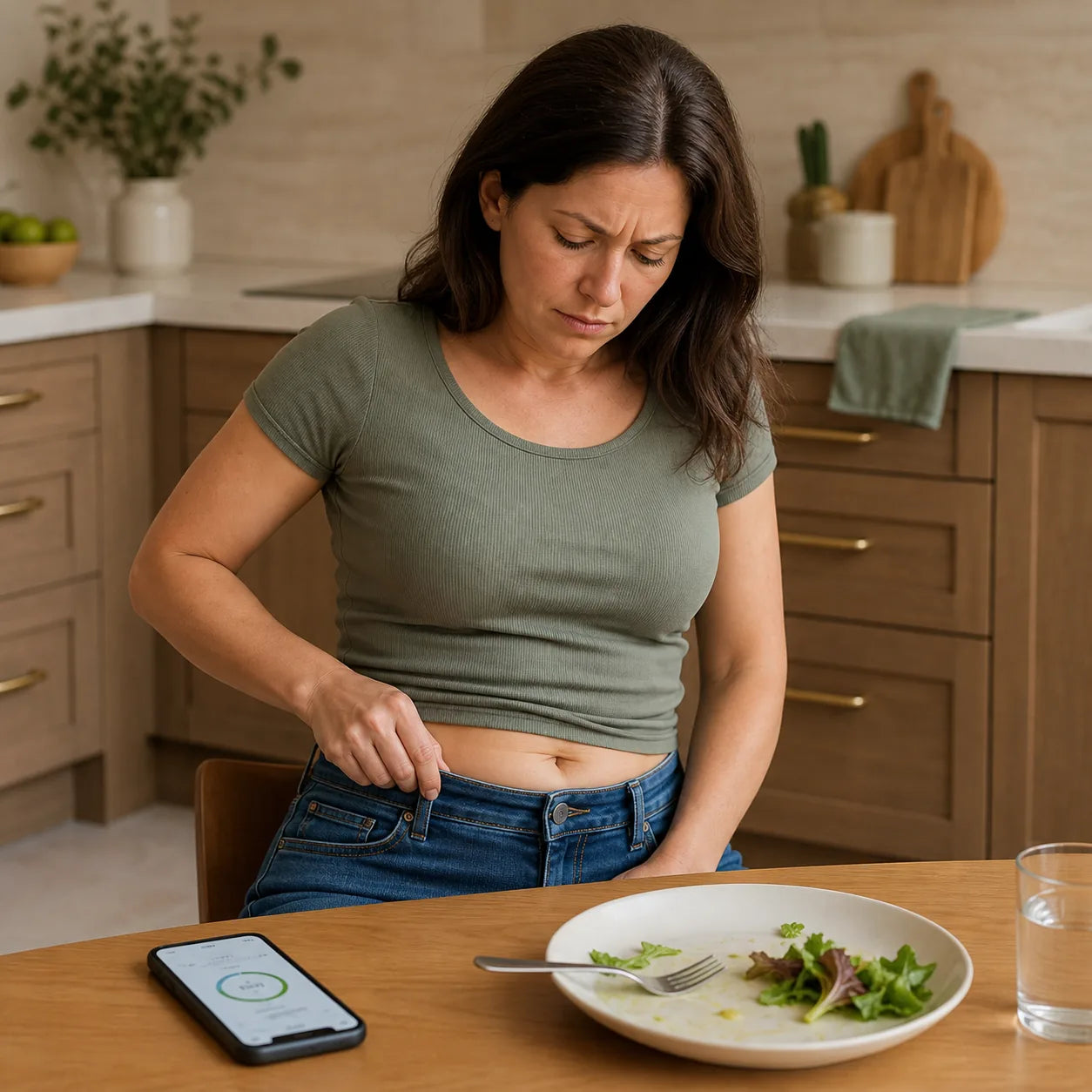
The meal can fit the calorie target while the late-day pressure still makes the plan feel broken.
The failed-solution list gets longer every time you restart
A stalled week rarely leads to one small adjustment. It leads to a new set of rules.
You replace breakfast with coffee. Lunch becomes a protein shake. You add fiber because someone says you are not eating enough. Then you remove carbohydrates because someone else says insulin is the problem.
The advice keeps changing. Your day keeps getting harder.
- Food scale, calorie app, macro targets, and daily weigh-ins
- Keto, fasting windows, low-fat weeks, and “clean eating” restarts
- Protein bars and shakes, plus fiber powders, probiotics, or green drinks
- Detox teas, laxative cleanses, water cuts, and sweat-heavy workouts
- Another pair of loose pants for the days your stomach feels bigger
The body shame changes ordinary decisions. You choose the loose black top for dinner. You stand behind someone in a group photo. You avoid a tank top during a hot afternoon because you do not want anyone looking at your stomach.
One Reddit user described wearing pants through summer, avoiding pictures, and barely looking in the mirror. They called it an exhausting cycle of starting and stopping.
“I'm ready to make this the last time I start over.”
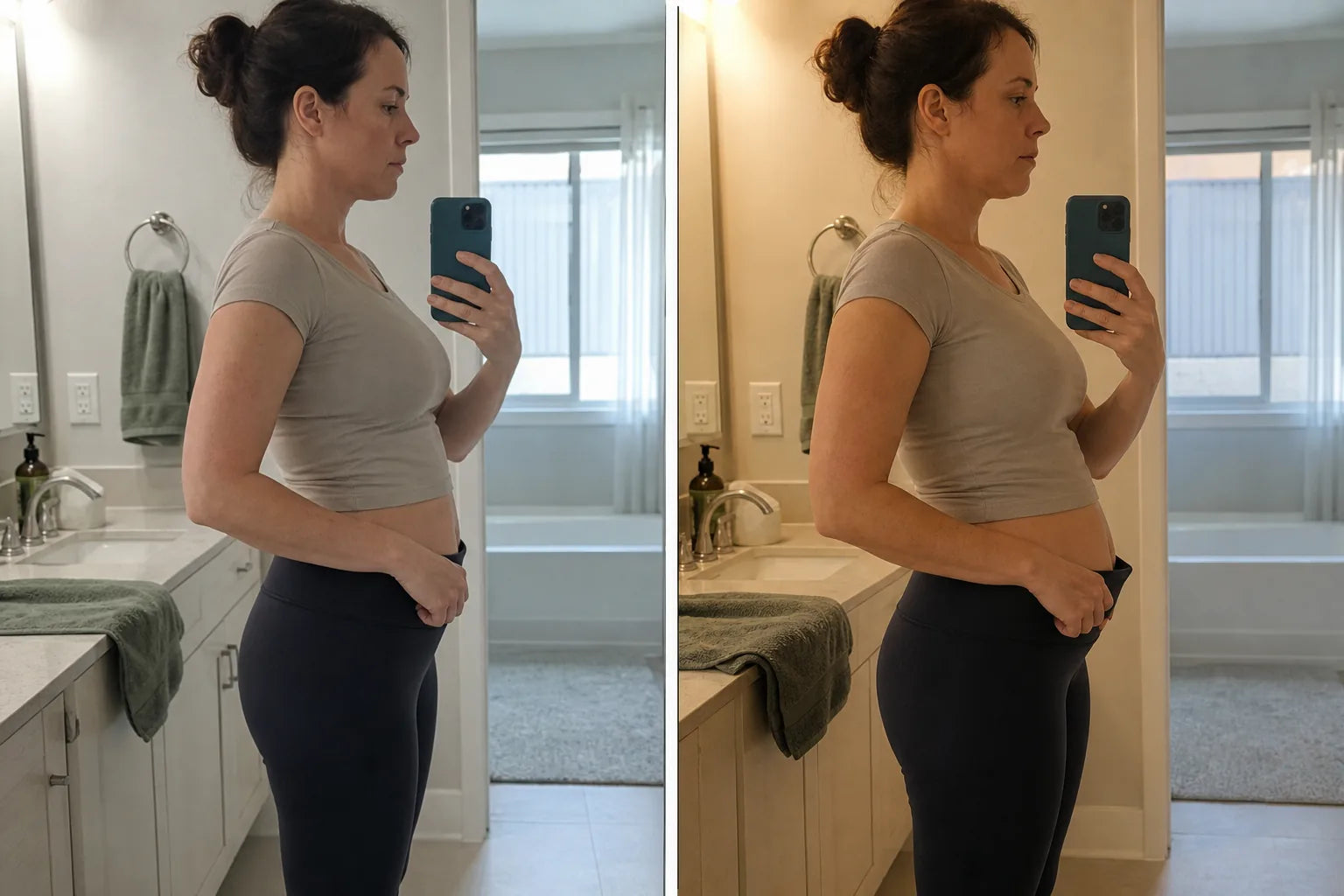
The mirror can show a dramatic same-day change even while body fat changes slowly.
Your evening stomach is not a body-fat measurement
Body fat changes through sustained energy balance. Your stomach can look and feel different within hours for several other reasons.
Food and liquid have physical weight. Bowel contents remain inside the digestive tract until they leave. Gas stretches the abdomen. Constipation adds pressure. Sodium and carbohydrate intake change how much water your body holds.
Researchers recorded abdominal girth for 24 hours in 20 healthy women. Girth was higher at the end of the day and after a standard meal.
A long-term series of standardized morning weigh-ins found one-day variation with a standard deviation of 0.53 percent. Prior small studies reported similar day-to-day movement.
One scale number combines several moving parts
The scale reports total mass. It does not identify the source of a same-day change.
This does not make calories irrelevant. It explains why one evening mirror check can hide several weeks of slow fat loss.
You see the stomach first. You call the whole change fat. Then you cut tomorrow's food to fix a problem the food log never measured.
A tight waistband at 4 p.m. does not prove that lunch stopped fat loss. Same-day abdominal changes include gut contents and distension.
The limitPersistent, painful, sudden, or one-sided swelling needs medical evaluation. A supplement cannot diagnose the cause.
Dieting can turn lunch into a pile of concentrated “healthy” products
Calorie cutting changes more than the amount you eat. It changes the type of food many people rely on.
A normal breakfast becomes a shake with protein powder and sweetener, plus several gums or added fibers. Lunch becomes a bar beside a large coffee. Dinner gets loaded with vegetables because the app says the volume is almost free.
Each choice can fit the calorie budget. The combined routine can still leave some people gassy, constipated, or uncomfortable.
Fiber illustrates the problem. More fiber sounds like an automatic fix. Adding a large dose quickly can increase gas and pressure, especially when water intake and bowel habits do not keep pace.
Some fermentable carbohydrates also trigger bloating in sensitive people. Protein itself is not the universal cause. The full ingredient list, serving size, and repetition across the day matter.
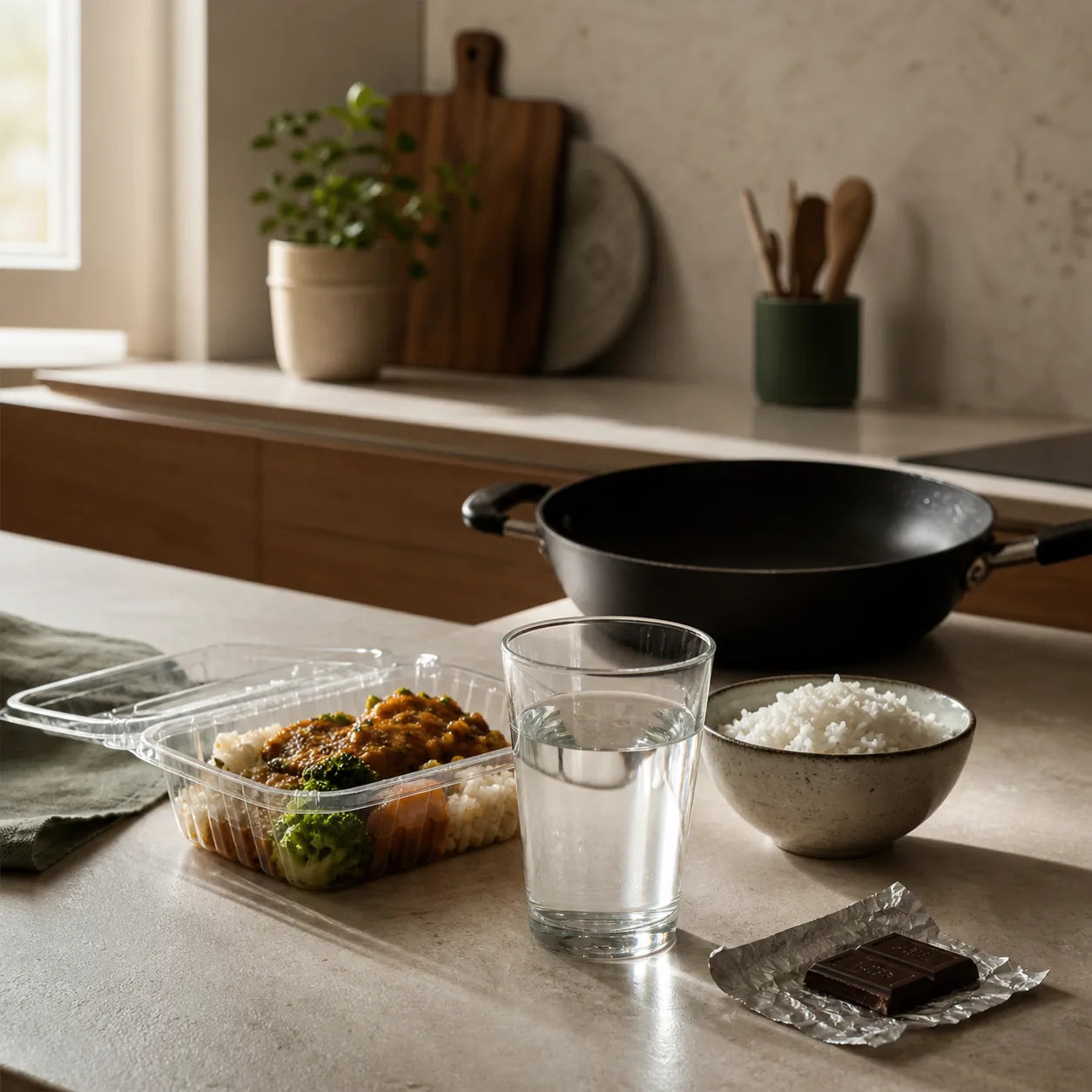
A low-calorie day can become a repetitive stack of powders and bars, sweeteners, gums, or packaged meals.
The calorie app rewards the lower total. It does not warn you that breakfast and lunch now contain the same sweeteners or concentrated fibers.
When the pressure arrives, you blame the meal's calories. The next day gets more restrictive, while the gut routine stays the same.
Detox teas produce a dramatic morning number for the wrong reason
The promise is hard to resist when you feel stuck. Drink the tea tonight. Wake up flatter. See proof that something finally moved.
A laxative can empty stool and water. A fast lowers the amount of food moving through the gut. Cutting carbohydrates reduces stored glycogen and the water held with it.
The scale can fall fast because several non-fat compartments changed at once.
Then you eat and drink normally. Water returns, food moves through the digestive tract, and the number rises. The rebound feels personal even though it follows ordinary physiology.
This cycle trains you to chase the emptiest possible weigh-in. It also makes a sustainable meal feel dangerous because normal food weight looks like failure.
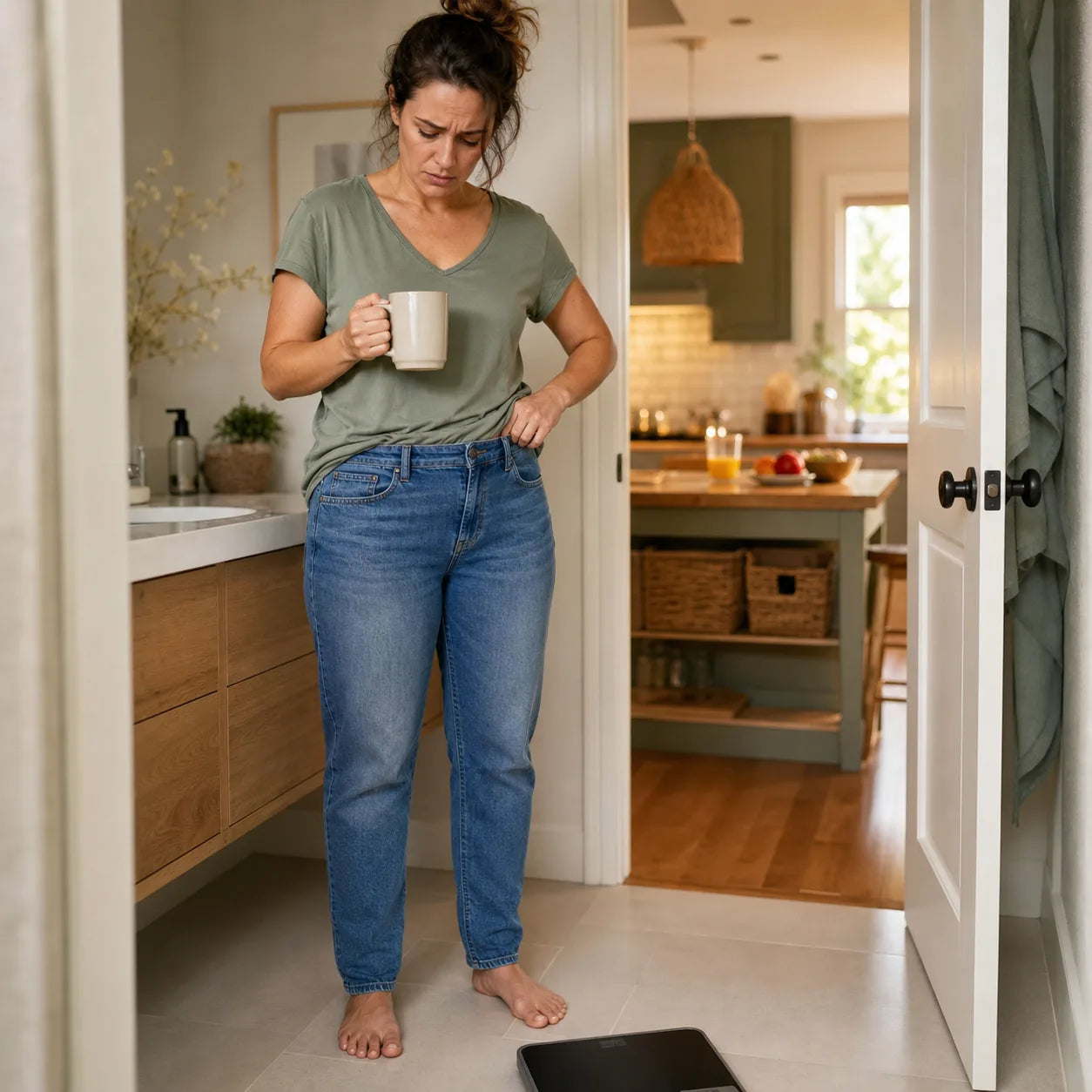
A lower number after fasting or laxative output cannot show how much body fat changed.
A daily gut-support routine has to work beside food and water. You should not need diarrhea, dehydration, or a day planned around the bathroom.
Cutting calories does not add gut-binding support
The digestive tract handles every meal and drink, along with supplements or other swallowed compounds, before any diet app counts the calories.
An oral binder works in that physical space. It travels through the gastrointestinal tract, makes contact with material inside the gut, and leaves through stool.
A randomized human study tested purified clinoptilolite, a natural form of zeolite, in 42 healthy adults. Participants took clinoptilolite or a comparison before receiving a small oral lead tracer.
Researchers measured how much tracer entered the body. The clinoptilolite group showed about a 90 percent reduction in uptake under the study conditions.
The study did not test Trace, body fat, or weight loss. It answered a narrower question that matters here: purified clinoptilolite provided measurable binding activity inside the human gut.
That trial establishes the binder's job inside the gut. It did not measure bloating or fat loss. The evidence for how the finished Trace formula feels in daily use comes from verified buyers.
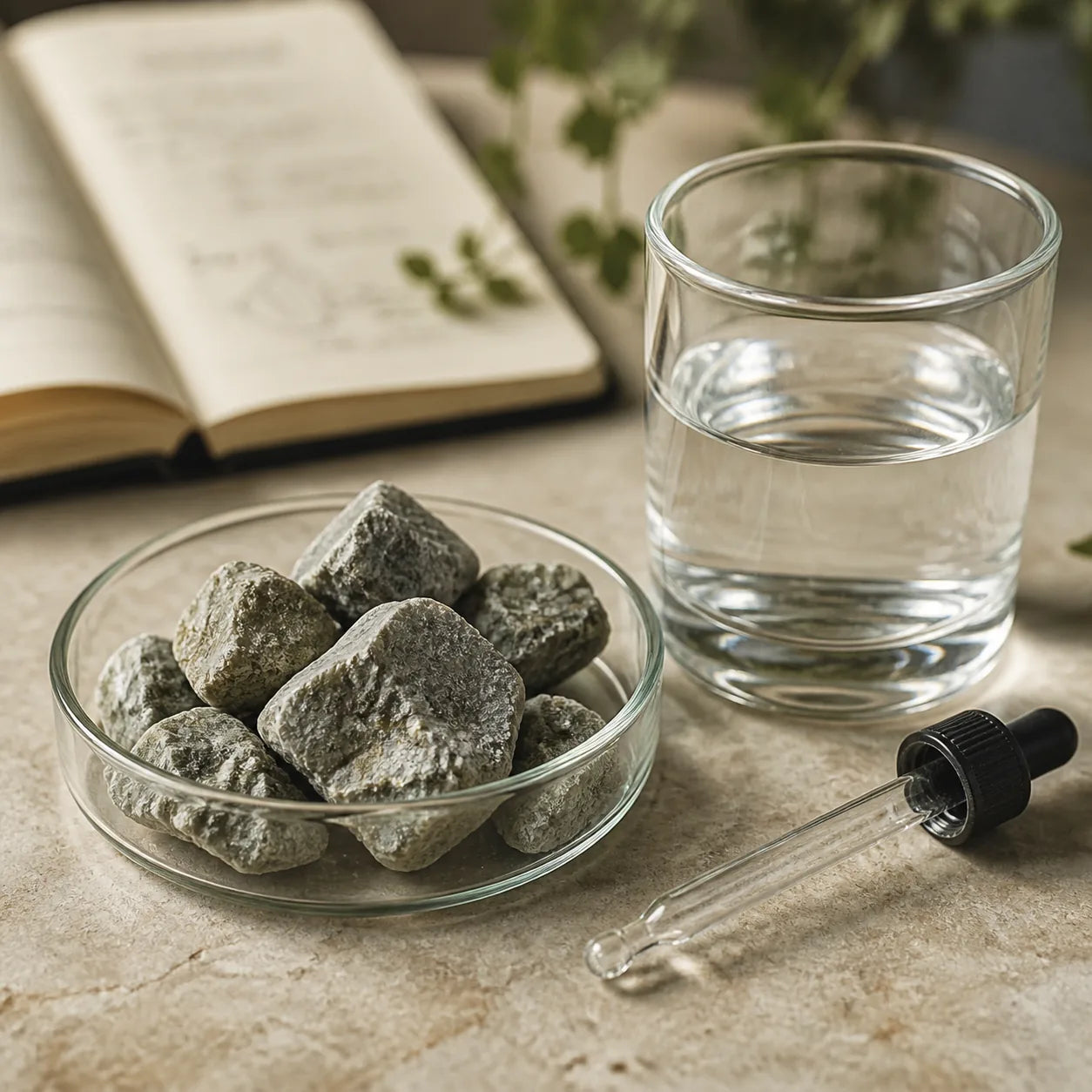
Clinoptilolite provides binding support where swallowed material passes through the digestive tract.
This is the part repeated calorie cuts never address. Eating fewer calories changes energy intake. It does not add gut-binding support.
A harsh cleanse attacks the problem by emptying the bowel. A binder has a different job and does not need to force a bathroom emergency to perform it.
Trace was built for the afternoon that makes you want to quit
Trace has one job here: support the gut while you keep a sustainable calorie target.
Trace combines zeolite with shilajit-derived humic and fulvic compounds. The directions call for ten drops in water twice daily. One bottle contains 120 servings, described as a 60-day supply.
The formula gives the gut-binding and mineral-support steps one repeatable place in the day.
You keep the calorie target that makes sense. You keep eating enough protein. You keep walking, lifting, or following the movement plan you can sustain.
Trace sits beside that work instead of asking you to replace lunch with tea or chase another overnight drop.

Finish lunch without letting afternoon heaviness ruin the plan
Trace adds gut-binding and mineral support to the meals and movement you already chose.
What changed after they stayed with the routine
“My bloating is way down and I don't feel heavy every afternoon. Easy to stay consistent with.”
Sofia G. · Verified buyer“Skeptical about anything called 'cleanse,' but the afternoon fog lifting was undeniable. Three weeks in and I'm sold.”
Rachel M. · Verified buyer“Honest: it took me five weeks to feel it, and I was skeptical. Glad I stuck with it, the energy is real now.”
Priya N. · Verified buyerCustomer reports are individual experiences, not clinical results. Timing and results vary.
A lighter afternoon changes more than the waistband
You finish lunch and return to work without replaying every ingredient.
At four o'clock, your jeans still feel like your jeans. You do not need to unbutton them in the car or change clothes before meeting friends.
Dinner stays on the plan because you are not trying to punish yourself for feeling swollen.
The next morning, one scale reading does not decide whether the week worked. You look at the seven-day trend and the number of afternoons that ended comfortably.
That is how a fat-loss routine becomes repeatable. You stop changing the rules every time your body holds more water or your gut feels full.

The twice-daily routine fits beside ordinary food and water instead of replacing them.
The verified reviews show that timing varies. One buyer reported a change after three weeks. Another said it took five weeks. That is why a weekend cleanse and one morning weigh-in make poor comparisons.
Use the first 14 days to separate progress from daily noise
Do not add Trace on the same day you start a fast, switch probiotics, double fiber, and begin a punishing workout plan. You will have no idea which change affected how you feel.
Keep the calorie target, water intake, and meal timing stable enough to compare one day with the next.
Measure your waist in the morning and evening. Note the hour when pressure or heaviness begins.
Take Trace as directed. Keep normal meals in place and record comfort after lunch and dinner.
Use the seven-day scale average. Ignore the urge to reward one low number or punish one high number.
Review evening waist pressure, bowel regularity, meal comfort, and how many times you wanted to abandon the plan.
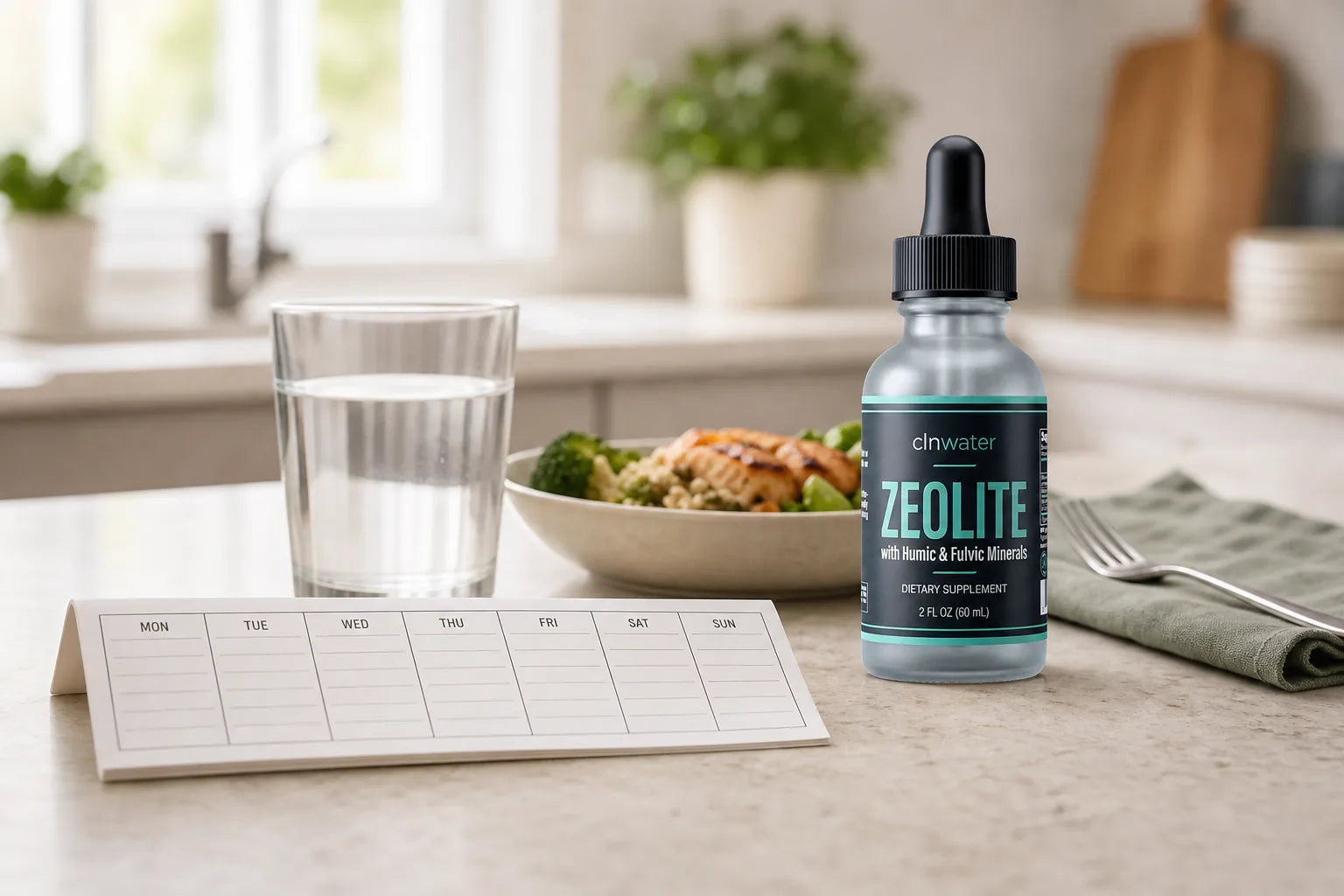
A short written record shows whether ordinary afternoons are changing without relying on one dramatic weigh-in.
The product page describes gradual changes and a 60-day money-back guarantee. That gives you more time than a weekend cleanse and a better comparison than one morning after a fast.
Compare the job each approach performs
Each routine changes a different thing. Cutting calories affects energy intake. Laxatives move stool and water. Trace supplies zeolite plus humic and fulvic compounds.
| Approach | What it changes | Why the afternoon problem can remain |
|---|---|---|
| Cut more calories | Creates a larger energy deficit | Does not address gas, stool, abdominal distension, or gut-binding support |
| Protein bars and shakes | Make calorie and protein targets easier to hit | Concentrated fibers, gums, or sweeteners can bother sensitive people |
| Laxative cleanse | Moves stool and water quickly | The lower scale number can return when normal food and water return |
| Plain mineral drops | Add mineral compounds | Do not include zeolite gut-binding support |
| Trace | Pairs zeolite with humic and fulvic compounds | Works beside a sustainable calorie plan without forcing laxative output |
Trace has one defined role. It supports the gut with a binder and mineral compounds while you continue the habits that create fat loss over time.
Questions worth answering before you order
Trace is not a fat burner. The formula provides gut-binding and mineral support beside the calorie and movement habits responsible for fat loss.
The routine does not depend on laxative output or dehydration. Judge it by repeated afternoon comfort and the longer trend.
No. Painful, persistent, sudden, or unexplained swelling needs medical care. So do vomiting, fever, blood in stool, shortness of breath, and one-sided leg swelling.
A small randomized trial found that purified clinoptilolite reduced uptake of an oral lead tracer. It did not test Trace, weight loss, or bloating.
The current directions state ten drops twice daily. Review the full ingredient list and directions, plus the warnings and guarantee terms on the product page.
Stop letting one bloated afternoon erase a full week of work
You can keep responding to every tight waistband with a smaller meal, another fasting window, or a tea that empties water and stool.
That path has a familiar ending. Normal food returns, the scale moves, and you decide you failed again.
The other path keeps the fat-loss basics steady and gives the gut its own support step.
You eat the lunch you planned. You measure progress across weeks. You give yourself enough time to see whether fewer afternoons end with pressure or heaviness and make you want to quit.
Trace combines zeolite gut-binding support with humic and fulvic mineral compounds in a ten-drop, twice-daily routine.
The current offer includes a 60-day money-back guarantee. Review the terms, ingredient list, and directions before deciding.
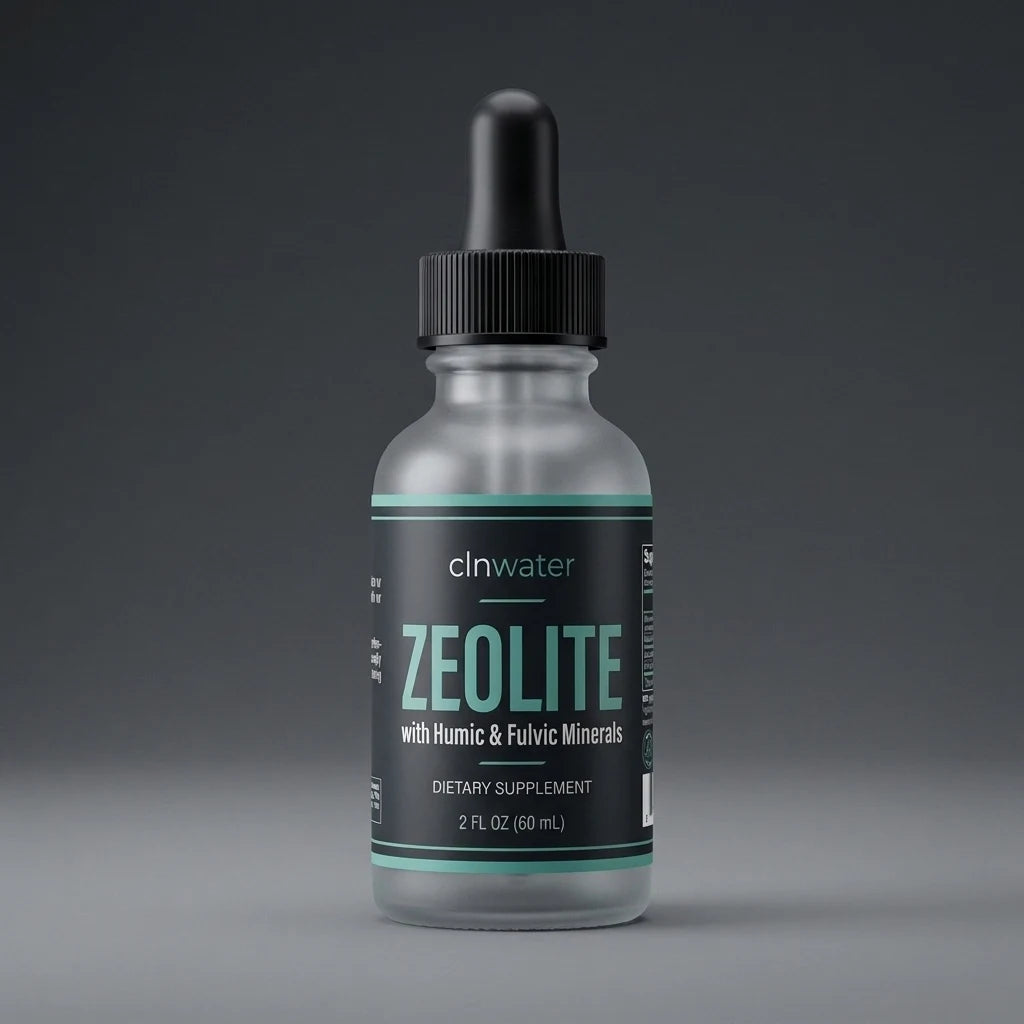
Support a lighter, more comfortable routine after meals
Keep normal food in place while Trace provides gut-binding and mineral support.
Check availability