
This week's batch is moving fast and stock is limited. The clnwater System is on sale today.
They found microplastics in human blood. Your tap is one of the sources nobody is testing for.
In 2022, researchers in Amsterdam reported plastic particles in the blood of 17 out of 22 healthy donors. Since then plastic has turned up in lungs and placentas. The studies made headlines for a week. The part that didn't make headlines is where it keeps getting in, every day, in your own kitchen.
 By Daniel Hartley, Contributor·Updated October 2026 · 7 min read
 ✓ Fact checked by Dana ReyesWritten by Daniel Hartley · Reviewed by our home-water editor
Pour a glass of water from your tap and hold it up to the light. It looks clean. That's the problem. The contaminants people worry about most right now, microplastics, PFAS, trace lead, have no color, no taste, and no smell. You could drink them for thirty years and never once notice.
For decades the deal with tap water was simple: the city treats it, the city tests it, you get a report once a year saying everything passed. And for the things on the list, that's true. The catch is what isn't on the list. There is no federal limit for microplastics in US drinking water. Your annual water report doesn't test for them because nobody requires it to. "Passed every test" and "tested for everything" are two very different sentences.
The studies that changed the question.
In March 2022, a team at Vrije Universiteit Amsterdam published something nobody had managed before: a method sensitive enough to measure plastic in human blood. They tested 22 healthy adult donors. They found plastic particles in 17 of them. PET, the plastic of water bottles. Polystyrene, the plastic of food packaging. Polyethylene, the plastic of, well, almost everything.
The same year, a UK team reported microplastics deep in the lungs of living patients. A year earlier, an Italian team had found them in human placentas. The question quietly shifted from "is plastic getting into us?" to "how much, from where, and what is it doing once it's there?" Science doesn't have the last answer yet. On the second one, the sources, it has a pretty clear list, and water is near the top of it.
Mara T., a thirty-eight-year-old in Austin, read about the blood study on her phone while filling her kids' water bottles at the kitchen sink. She did what most of us do with alarming news: closed the tab and went on with the morning. But the image stuck. A week later she ordered a home test kit, and a few weeks after that she was reading a lab report at her kitchen table that listed things her city's annual water report had never once mentioned.
The city report said we passed everything. The lab report had a whole second page of things the city report never even looked for.
How plastic gets into your tap in the first place.
Your water doesn't start at the treatment plant. It starts in reservoirs and rivers that sit under open sky, and the sky now carries plastic. Synthetic fibers shed from clothing in every laundry cycle, tire dust washes off every road when it rains, and packaging breaks down into fragments small enough to travel on the wind. Researchers have found microplastics in rain falling on protected wilderness. If it's in the rain, it's in the watershed, and if it's in the watershed, it's headed for the intake pipe.
Municipal treatment was never designed for this. The plants do an excellent job at what they were built for: killing pathogens, settling out sediment, keeping the water biologically safe. But a treatment process designed in the twentieth century doesn't catch particles measured in millionths of a meter, and the smallest ones pass straight through. Then the water travels miles through mains and service lines, some of which are themselves plastic, picking up whatever the journey adds.
None of this means your tap water is dangerous by the official definition. It means the official definition was written before anyone was asking this question.
Why your city doesn't test for it.
Regulation moves slowly by design. Before a contaminant gets a federal limit, it needs years of health studies, then proposed rules, then comment periods, then compliance timelines. PFAS, the "forever chemicals," were in American water for decades before the first enforceable federal limits arrived in 2024. Microplastics are earlier on that same conveyor belt: actively studied, increasingly measured, not yet regulated. Your utility isn't hiding anything. It's testing exactly what the law requires, and the law hasn't caught up.
That gap is the part worth sitting with. The annual report that says your water "meets or exceeds all federal standards" is telling the truth, and it is also telling you nothing about the contaminant that made it into human blood. Both things are true at once. Waiting for the rules to catch up is a fine strategy for a utility. It's a strange strategy for the person drinking the water in the meantime.
- Bacteria & pathogens
- Lead (at the plant)
- Chlorine levels
- Nitrates
- Microplastics
- Nanoplastics
- Most PFAS compounds
- What your own pipes add
The bottled water trap.
The instinct most people have at this point is to stop drinking tap water and switch to bottled. That instinct is backwards. In 2024, Columbia University researchers used a new laser technique to count plastic in bottled water and found roughly a quarter million detectable plastic fragments per liter, most of them nanoplastics small enough to pass through cell membranes. The water spends weeks or months sitting inside the thing that sheds the particles. Every twist of the cap sheds more.
So bottled isn't the exit. Tap water is cheaper, more regulated, and starts out with less plastic than the bottle. It's also where lead from old service lines, PFAS from industrial runoff, and the chlorine that keeps the pipes safe all ride along. The honest answer isn't switching sources. It's filtering the source you already have, at the last point before it reaches you.
Filtration is the part you actually control.
You can't vote your city into testing for microplastics this year, and you can't replace the miles of pipe between the treatment plant and your kitchen. What you can control is the last three feet. Multi-stage filtration at the tap physically traps particles and adsorbs dissolved contaminants before the water touches your glass. Microplastics, sediment, and rust get caught by the physical stages. Chlorine, lead, and PFAS get handled by the media stages.
One filter in the kitchen still leaves a gap, though, and it's a gap most people never think about: most of the water you're exposed to in a day never goes near your mouth.
Count the water in one ordinary day.
Walk through a Tuesday. You wake up and stand in a hot shower for ten minutes, the largest organ you have soaking in water you've never filtered, breathing the mist it throws off. You make coffee with tap water. You fill a glass at lunch and another at dinner. At the gym you refill a bottle at the fountain, at the office you drink whatever the cooler holds, at the restaurant you drink what they pour. By the time you fall asleep, water has reached you eight or ten separate times, and the kitchen faucet was only two or three of them.
This is why single-filter solutions feel good and change little. A pitcher in the fridge covers the glass you pour from it and nothing else. The shower, the coffee, the gym, the restaurant all stay exactly as they were. If the goal is lowering the total amount of this stuff that reaches you in a day, the math only moves when you cover the places the water actually finds you.
The system built for the whole problem.
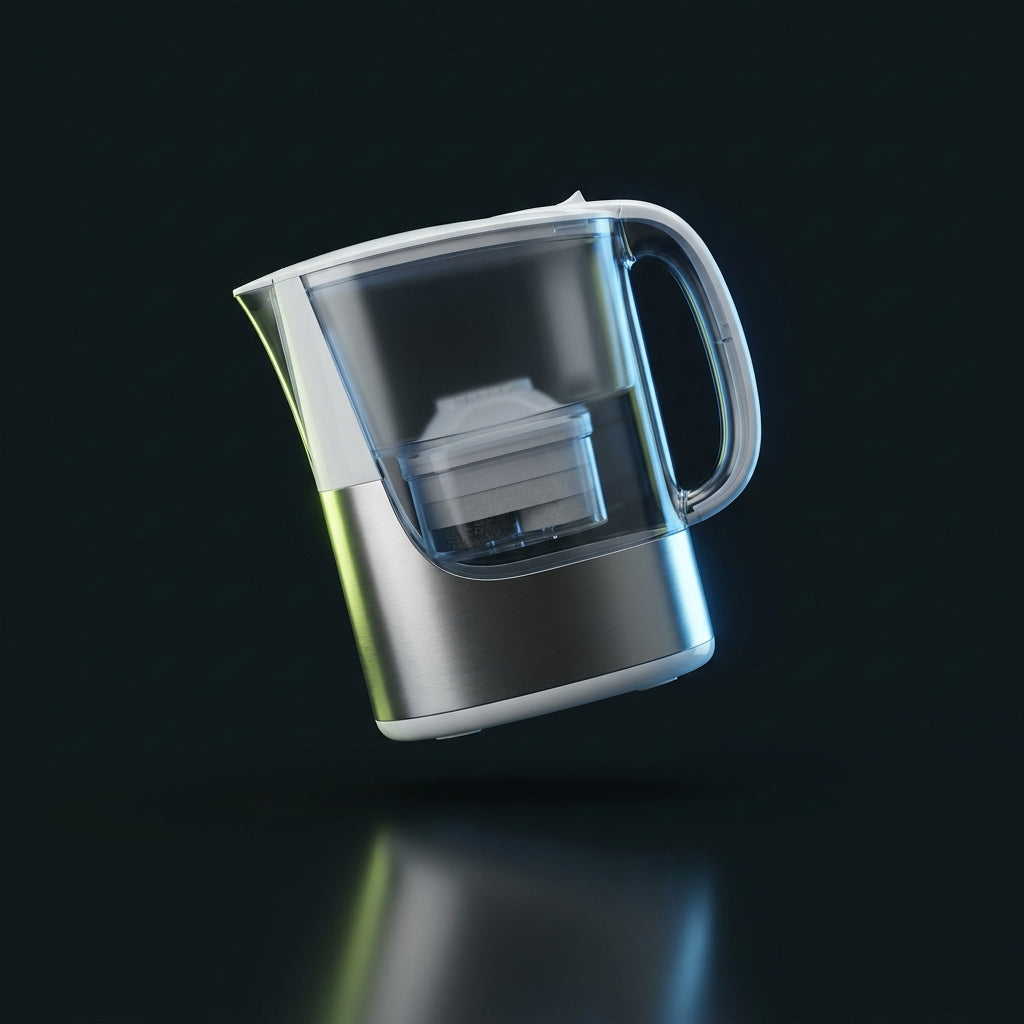
The name that keeps coming up in the water threads on Reddit and in the group chats where people compare lab results is clnwater, a small operation out of Utah. Instead of selling one filter, they cover the three places water actually reaches you, as one system.
The Drinking Filter is the core of it: a multi-stage cartridge for the kitchen that reduces lead, PFAS, chlorine, and particulates from every glass you pour at home.
The Filtered Shower Head covers the water you stand in. Hot showers aerosolize chlorine into a mist that strips skin and hair for ten minutes a day. Six stages of KDF-55 and coconut carbon pull it out at full pressure, and it threads onto any standard arm in five minutes, no plumber.
The Mineral & Taste Drops cover everywhere else. The office, the gym, the hotel, the restaurant. A few drops bring clean taste and minerals back to whatever water you've got, so the system doesn't end at your front door.
One system. Every glass, every shower, everywhere.
- Drinking Filter: reduces lead, PFAS, chlorine, and particulates at the kitchen tap.
- Filtered Shower Head: six-stage KDF + carbon, strips chlorine at full pressure.
- Mineral & Taste Drops: clean taste and minerals in any water, anywhere.
- One checkout: the Complete System bundles all three and saves up to $38.
An honest word about what filtration can and can't do.
A fair question at this point: is this fear-mongering to sell filters? So let's be precise about the claim. Nobody, including clnwater, can promise to remove every plastic particle from your life. Plastic is in food, in air, in dust. What filtration does is cut the water-borne share, which research keeps flagging as one of the main daily routes, and it does it passively, every day, without you thinking about it.
That's also the right frame for the science. Researchers are still working out what plastic in blood does long-term. You can wait a decade for those answers, or you can notice that nobody is publishing studies arguing for more plastic in your water, and act on the part that costs you one checkout and five minutes. Reducing a daily exposure while the science catches up isn't panic. It's the same logic as a seatbelt.
The math helps too. A household replacing two cases of bottled water a week spends $40 to $60 a month, every month, forever, and gets the highest-plastic water source on the market for the trouble. The Complete System is $129 once, with cartridges every few months. It pays for itself against the bottled habit inside a season, and the water it replaces it with is cleaner than what the bottles held.
What customers report after a month.
clnwater surveyed buyers four weeks in, and the pattern in the answers is consistent: the change people describe isn't dramatic, it's the absence of things. The pool smell in the shower steam, gone. The plastic-adjacent taste in the morning glass, gone. The case of bottled water in the garage, no longer getting replaced.
We were spending $40 a month on bottled water to avoid the tap, and the bottles were the bigger plastic problem the whole time.
There's also a quieter effect people mention: they stopped thinking about it. The filters do their work in the background, the cartridges swap out every few months, and the question of what's in the water stops being a thing you carry around. For most households that's the actual product.
What to expect in your first thirty days.
Week 1. Set up the drinking filter, thread on the shower head, drop the bottle of drops in your bag. The first thing most people notice is taste: water that tastes like nothing, which is what it's supposed to taste like.
Week 2. The shower stops smelling like a pool. Skin feels less tight after hot showers.
Week 3. You stop buying bottled water, which means you stop drinking from the single highest-plastic source in your day.
Week 4. The system disappears into the routine. Cartridges swap in seconds every few months, and that's the whole maintenance story.
Filtration reduces contaminants including particulates, chlorine, lead, and PFAS; reduction rates vary by contaminant and by local water. This is about removing everyday exposure at the tap, not a medical claim.
So here's where it lands.
Plastic in blood is the kind of finding you can't un-read. You can't control what the studies find next, and you can't control what your city tests for. You can control the last three feet of pipe in your own home, today, for less than a year of bottled water.
It covers every way water reaches you. The glass you drink, the shower you stand in, the water you're handed everywhere else.
It costs less than the habit it replaces. The Complete System is $129 once. A bottled-water household spends that in a season, and gets more plastic for the money.
And the risk is on clnwater, not you. Run the system for 60 days. If you don't notice the difference, send it back, opened or not, and get your money back.
Most people read a headline like the blood study, feel a low-grade dread for a day, and change nothing, because the problem feels too big to act on. It isn't. The exposure you can actually do something about runs through your own faucet, and fixing that takes one checkout and five minutes with no tools.
This is an advertisement, not a news article or independent editorial. The individuals and comments described are illustrative and based on composite customer experiences; individual results vary. References to published research (blood, lung, placenta, and bottled-water studies) describe those researchers' reported findings and are not claims about this product's effects. Claims refer to reduction of common contaminants in everyday tap water and are not medical claims. clnwater is the advertiser of the products described.